Download
Unlock your outdoors
Open the camera on your mobile device and place the QR code in the camera's "view”
How to Be the Spotter Every Driver Wants on the Trail
Published: Jul 27, 2026
How to Be the Spotter Every Driver Wants on the Trail
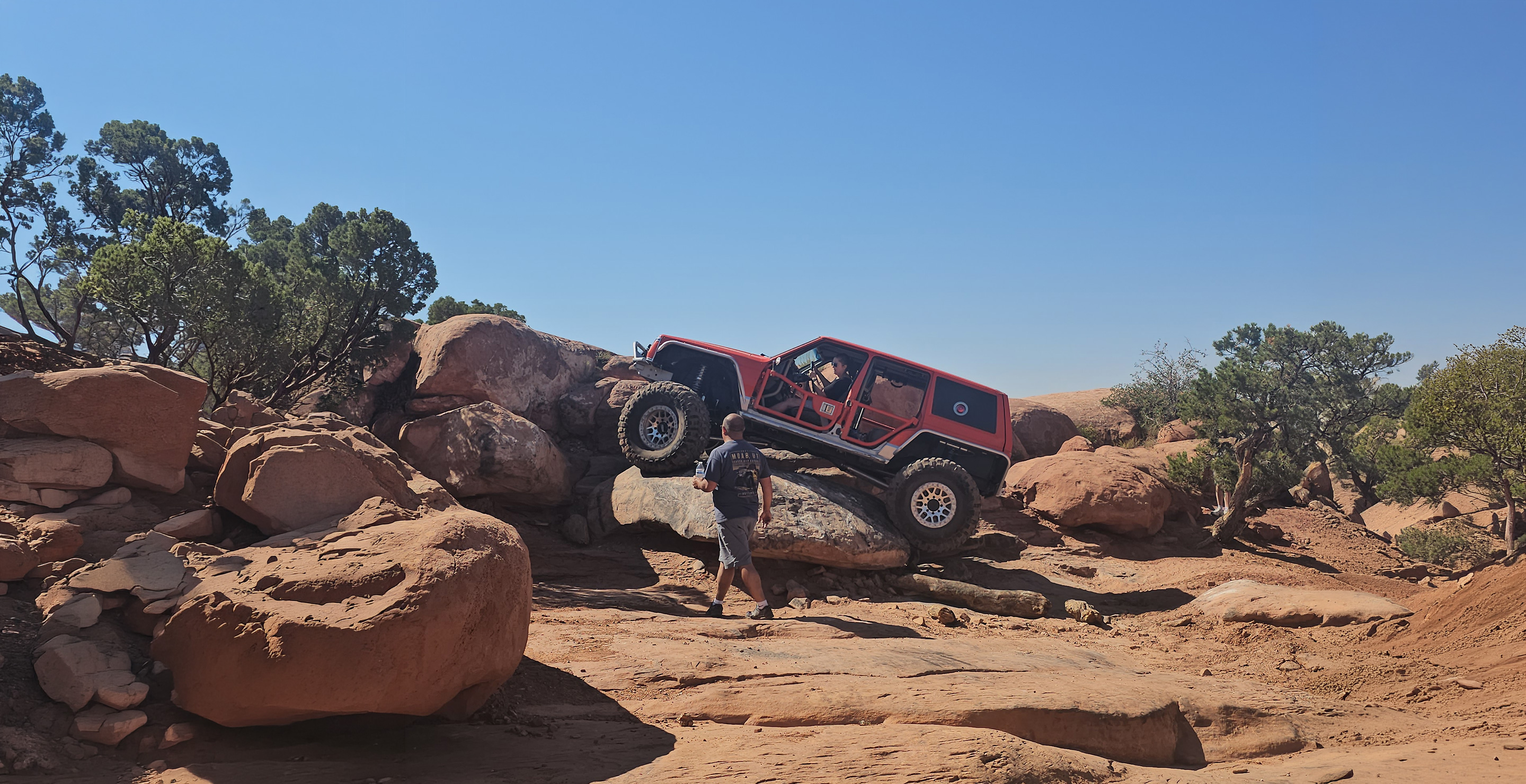
One of the most rewarding parts of off-roading is the camaraderie that builds when everyone works together to finish a trail. It’s a team effort from start to finish. Vehicles aren't see-through and it can be tough to see where the tires are positioned on an obstacle or if the rear-diff is hung-up on a rock.
That’s why its best practice to – Never Ride Alone – always off-road with someone that can guide you through a tricky part of the trail. This is the role of the spotter, the drivers eyes and ears outside the vehicle. Directing them where to put the tires, when to give it some gas, hold the brake, steer left, or steer right in order to safely navigate a difficult section of the trail.
Spotter Summary:
- A spotter helps a driver navigate obstacles on a trail, communicating when to steer, brake, and accelerate via verbal cues and/or hand gestures.
- The driver should only be communicating with one and only one spotter. Too many voices and opinions can create frustration and confusion.
- The spotter and driver should do their best to remain calm, even if things aren't going exactly to plan. Cooler heads prevail, especially in tense situations.
- Keep an open mind when determining the line or strategy, every vehicle and driver are different.
- A driver and spotter should agree ahead of time on how they will communicate with each other – verbal, hand gestures, or both.
- In large group rides, it's often easiest to have one spotter guide everyone through an obstacle instead of swapping out spotters for every vehicle.
- The driver is ultimately responsible for their vehicle.
- The spotter needs to be aware of their surroundings in the event the vehicle does something unexpected.
- If you encounter another vehicle on the trail that might need a spotter; ask if they need help or would like a spotter. Never immediately start spotting for someone you don’t know.
A spotter's role
It's impossible to see all four tires of a vehicle from the driver's seat, let alone what's around them. Keeping an eye on the outside of the drivers vehicle is a main responsibility of the spotter. They will have a complete view of the vehicle and where it's lined up on an obstacle. There are times, such as on a steep incline, when the driver can't see much of anything except the sky. Driving blind is never a good idea.
As in any partnership, trust and communication are key. The driver has to be able to trust the spotter's directions, and the spotter has to trust the driver will follow those directions. If either piece is missing, the result can be more than a bruised ego, such as a damaged vehicle or injury to the spotter.

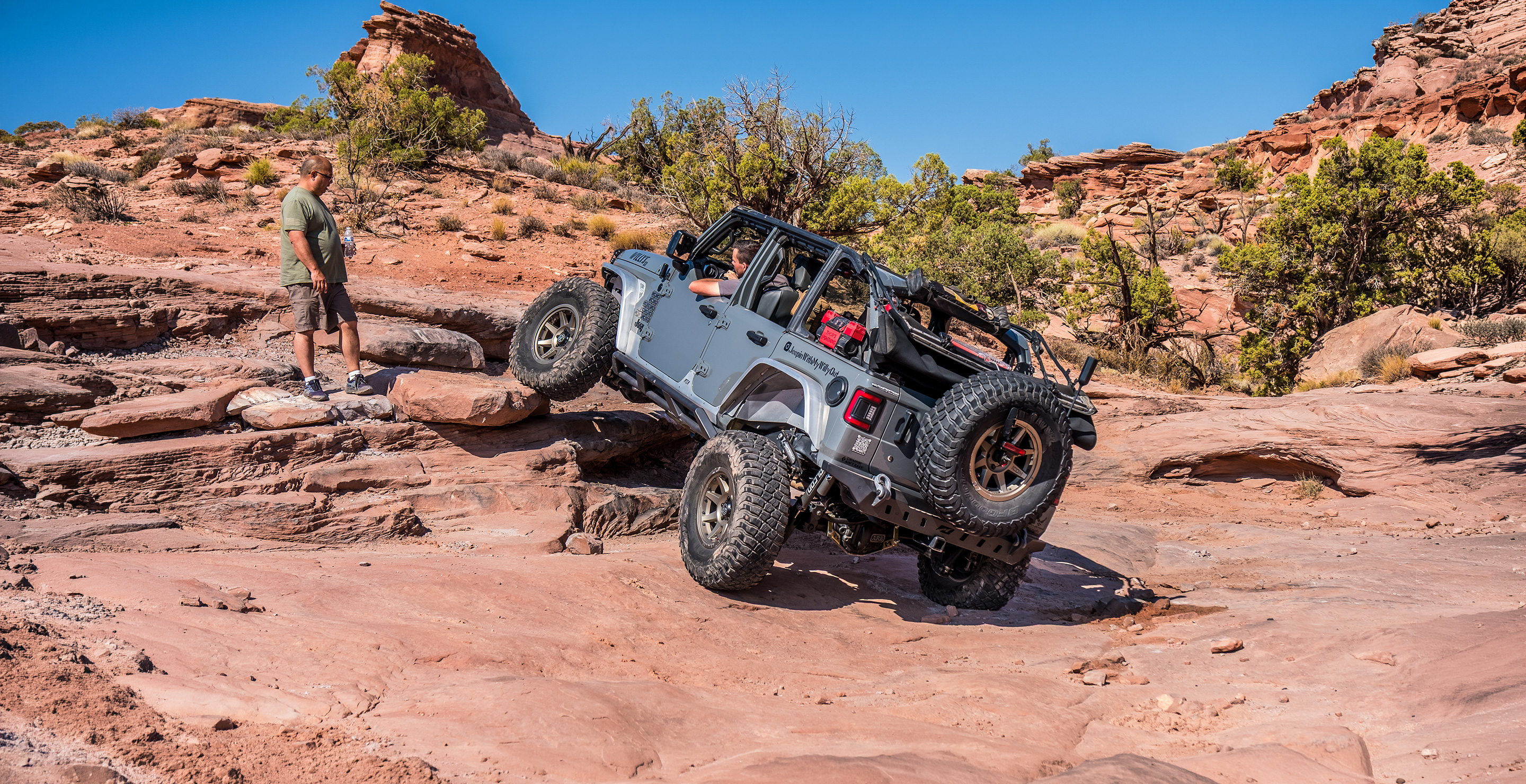
Communication between the driver and spotter should be a one-to-one relationship. Even if there are additional people outside the vehicle monitoring progress or providing suggestions, the driver should only be listening and watching the spotter to avoid any ambiguity about what needs to be done. Even though the spotter is telling the person at the controls what they can't see, the ultimate responsibility for the vehicle is the driver.
In larger group rides, it's common to have one spotter assigned to each obstacle. This is more efficient, as the spotters don't have to hop around from one area to the next with a specific vehicle. It also gives the spotter more time to learn what lines can be taken for a given type vehicle, which improves the guidance for the next driver. In this case, it makes sense to have the spotters with the most experience on the trail be the spotters on the most difficult sections. It's also a lot easier to gain trust in someone who has been tasked with getting every vehicle through a particular obstacle.
Basic guidelines for spotting
A spotter or driver should never be in a rush to get past an obstacle, and it's imperative that the spotter remain calm even if the line isn't perfect or the driver has to back up and try multiple lines. The safest way through sometimes requires taking a break to reassess. When in doubt, slow down, and if you're not comfortable in your role as the spotter, ask if someone else can help or stand in for you.
To make communication seamless, the driver/spotter duo should agree on the communication they'll use before starting an obstacle. One person's stop could be another's sign to slow down. It's always best to sort this out before you need to rely on those directions. Unless there's a good reason not to, the driver should always put their windows down so they can hear the spotter's verbal commands. This is true even if you decide to use hand signals. In an emergency it can be second nature for the spotter to yell something like "stop!"
That said, due to bad weather or distance, it can be helpful to communicate via radio. This allows the driver to keep their windows closed and gives the spotter more flexibility in their positioning relative to the vehicle and obstacle.
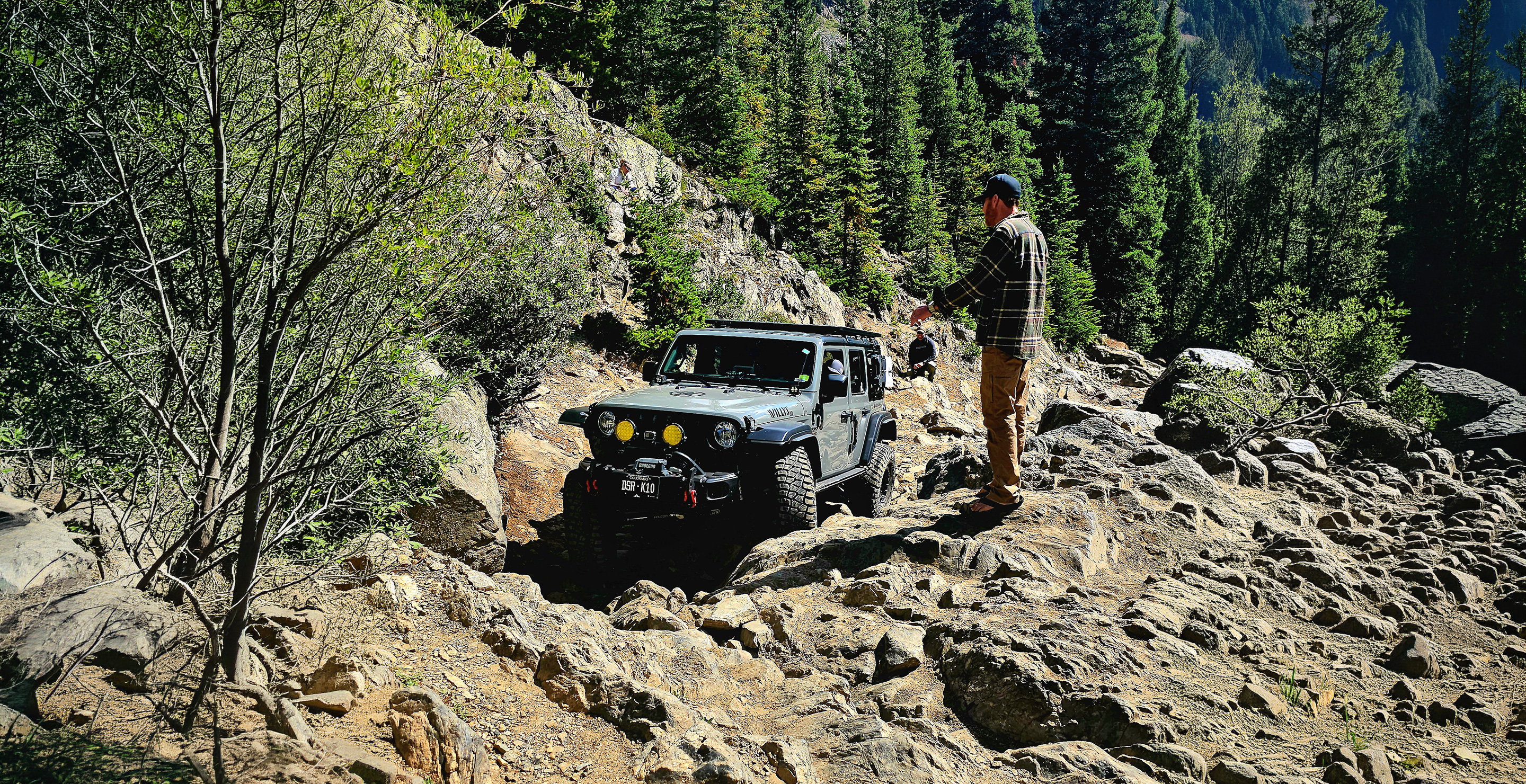
In addition to planning the vehicle lines, the spotter needs to think ahead and have an exit strategy to keep themselves out of harm's way in case something goes wrong. This means being conscious of where you are in relation to the vehicle and any terrain like rocks or cliffs – constantly thinking about where you can move to get to safety. Ideally the spotter will position themselves in a place where they can't be injured by a sliding rock or rolling vehicle. But that's not always feasible - so know your escape options. In general, it's best for the spotter to be uphill of the vehicle and stay out of the vehicle's path when throttle is required.
There are rules for the driver as well. Beyond dutifully following the spotters’ directions, it’s imperative that the driver can see and hear the spotter. The spotter should be constantly moving around to get a full picture of the situation, if you, as the driver, cannot hear or see the spotter. Stop. Tell the spotter you cannot hear or see them and wait for the them to reposition themselves. Only continue once you have reestablished a visual and can hear them again.
Essential Spotter Techniques and Hand Signals
As mentioned above, it's imperative to discuss what kinds of signals your spotter will use to communicate with you before starting an obstacle. Signals can be hand gestures, verbal, or a combination of the two.
A good tip for new spotters is to get in the habit of referring to the sides of the vehicle as "driver" and "passenger" – this avoids any confusion of left vs. right, since the driver's left is likely to be the spotter's right and vice versa.
There's no universal set of gestures, but they should be agreed upon and obvious to the driver. Examples include a beckoning hand motion for come forward, parallel hands waved to tell the driver to continue straight ahead. Pointing with a finger or signaling with a whole arm to indicate the direction to turn the wheel. A spotter can add a raised hand to the beckoning motion to communicate advancing at a slow crawl. Stop can be two raised hands or a closed fist. Speed and directional gestures can also be combined. To indicate reverse, the spotter should first tell the driver to come to a complete stop, then use one or two hands to communicate backing up, with or without steering input.
How to be a great spotter
Like most skills, spotting takes practice to master. The more experience you get both behind the wheel and directing others, the better equipped you'll be. Remember, the spotter dictates the line the driver will take, so having extensive off-road experience and/or knowledge of the specific obstacle is ideal for getting everyone through safely.
Communication is key in being a great spotter. Consistent communication in using the same words and gestures every time so the driver can build trust and react quickly. Watch the vehicle’s position, anticipate the next move, and communicate before a problem develops instead of after it happens.
Another important skill for a spotter is guiding different vehicles through the same obstacle. The ideal line can change depending on wheelbase, width, tire size, and suspension travel. Understanding a vehicle’s capabilities will make your spotting much more effective.
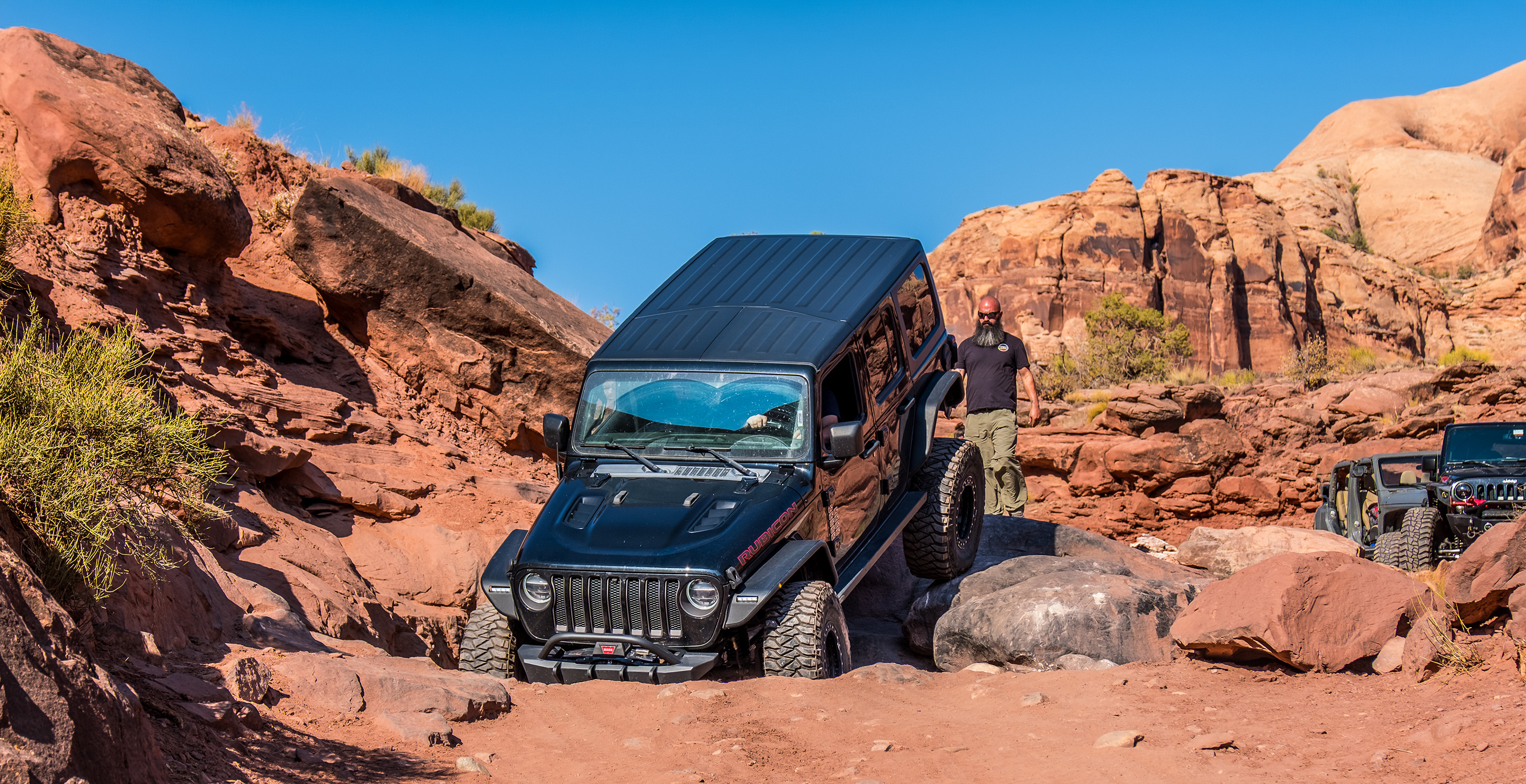
The best spotters are calm and open-minded. Calmness matters and the spotter sets the tone for the obstacle. When the spotter stays relaxed, the driver is more likely to stay focused, trust the guidance, and make smoother transitions. A good spotter adjusts the line, communicates clearly, and stays flexible as the terrain and vehicle change. Staying calm and the willingness to adapt helps build trust between the driver and spotter as they navigate an obstacle.
Great spotters don’t assume that everyone needs or wants their help. Before offering guidance, ask the driver if they want assistance and only then offer to spot them through an obstacle.
And don't be afraid to speak up if you're uncomfortable spotting for someone. If you don't feel like you know the obstacle well enough or you're not communicating well, it's best to say so and avoid any expensive or dangerous situations. The best spotters know their limits and skillsets.
John Thies
Founder / CEO
John is the Founder of Outryd and an avid wheeler. He is a lifelong off-road and outdoor enthusiast. When he's not on the dirt chasing his next off-road adventure in his SxS or Bronco Raptor - he's spending time with family, friends, and quite possibly chasing a white ball around the golf course.
Out·ry·der |'aut-ˌrī-der|
noun
An Outryder believes the best adventures are co-built. Not just by the trails taken, but by the knowledge shared. They believe in clarity over uncertainty. In access over ego. In connection over competition. With curiosity as their compass, and community as their guide.