Download
Unlock your outdoors
Open the camera on your mobile device and place the QR code in the camera's "view”
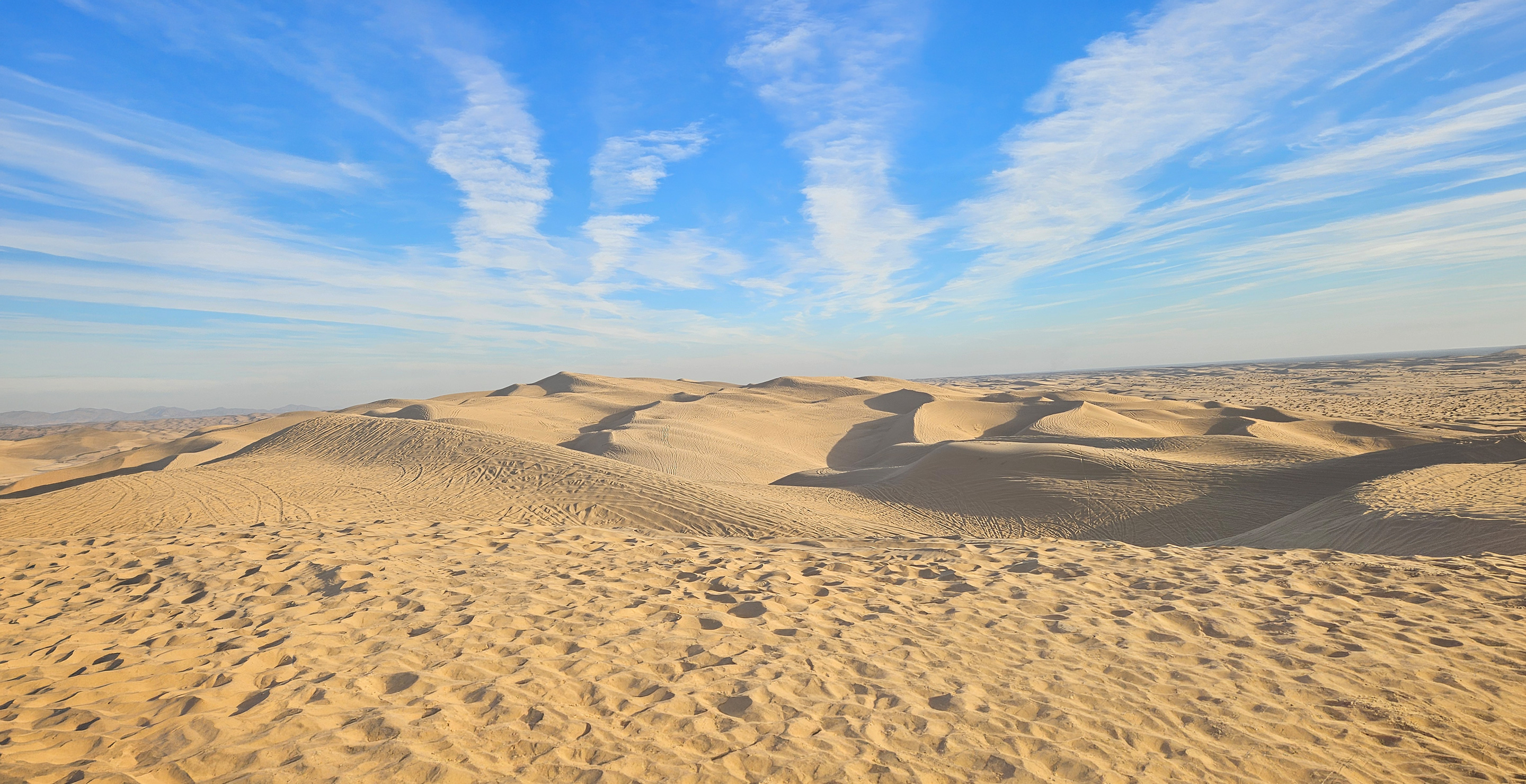
Sand Season: How to Drive Dunes Without Digging In
Published: Oct 5, 2026
Sand Season: How to Drive Dunes Without Digging Yourself In
Sand season starts when the southern temperatures finally become tolerable. Spend a summer afternoon in the dunes, Glamis for one, and you quickly understand why the season runs from October through Mid-April.
The bigger adjustment comes when you arrive with habits built somewhere else. On rock, dirt, and hardpack you have a firm surface to work against. In sand you don't, so the throttle and speed habits you built there need rethinking.
You can prepare for some of that ahead of time. The rest you plan around.
How Vehicles Behave on Sand
On firm ground, your tires have something solid to push against. In sand, they have to stay on top of the surface rather than dig into it. Airing down gives them more footprint to work with, but the right pressure depends on your vehicle and tires, so there is no universal number.
You lose momentum all the way up a steep dune, so you need enough speed to keep moving through the softer surface. Let off the gas halfway up and you may not have enough momentum left to finish the climb.
Balanced throttle is the key to momentum in the dunes. My father taught me to think about it this way: there is an egg under the pedal, and jerky throttle movements break it. Too much throttle, applied too fast, spins the tires and digs them in or, worse, breaks the drive belt. Too little leaves you short of the top.

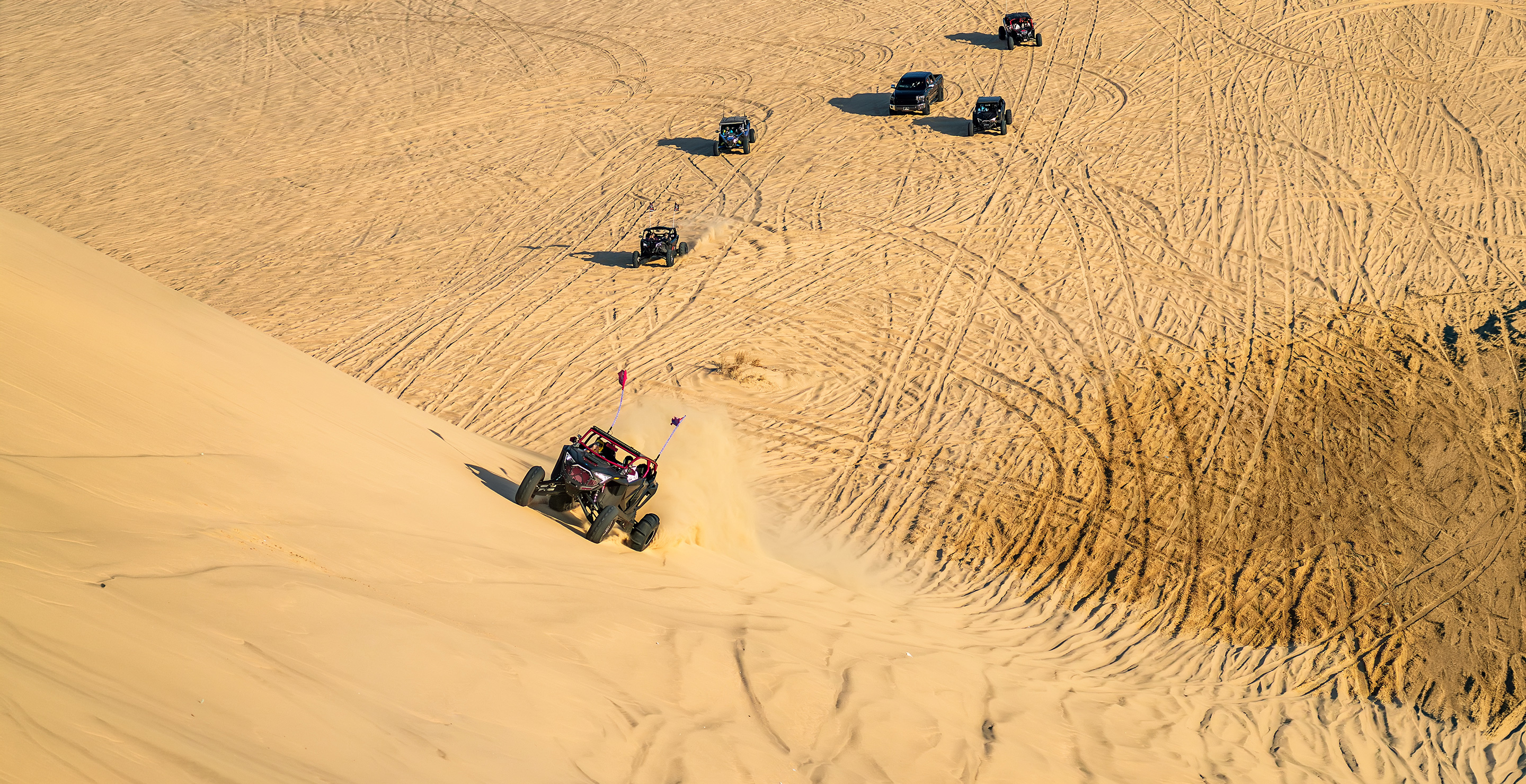
St. Anthony Sand Dunes, Idaho
That balance gets tested the most on a climb, and the speed that carries you up the face also shortens the time you have to react to something you didn't see coming.
Knowing when to abandon a climb is part of that balance. Once you have dug the tires in or broken a belt, the problem is harder to solve than it was a few seconds earlier.
Steering on sand is like steering a boat: you turn the wheel and the heading changes after a lag. On sand, that lag is the tires looking for traction. Treat the wheel like the egg, with smooth, fluid inputs and some patience before the vehicle responds.
Tires and Setup Change How Sand Responds
The machine on top of the sand matters as much as the sand itself.
Dedicated dune machines show it best. Sand rails, SxSs, ATVs, and dirt bikes often run paddle tires on the rear, with front tires designed more around steering than propulsion. The paddles scoop and move sand rather than trying to find a hard surface underneath it. The downside shows up on hard surfaces, where a paddle tire that works well in deep sand can wear quickly or suffer damage.
A larger or wider tire floats better, while tire shape and construction change how hard the vehicle has to push through the sand. A lighter vehicle generally has an easier time staying on top of soft sand than a heavier one, which sinks deeper and needs more speed and power to get through it.
You need enough power to keep the vehicle moving on steep dunes and deep sand. Anyone who has watched a capable machine work its way toward the top of China Wall at Glamis has seen the difference horsepower can make. The climb demands sustained power long after the initial approach.
More power makes momentum easier to hold, but it doesn't make higher speed any safer. With a powerful vehicle, you can also get deeper into a bad situation before you realize it.
Reading the Dunes
In the dunes, sunlight and shadows are how you read the shape of the terrain. Shadows give the sand depth, and that is how you pick out the curves and depressions. Around the middle of the day, when the sun is directly overhead, those shadows disappear and the dunes get much harder to read.
One hazard worth knowing by name is the witch's eye, a hole or depression formed by swirling wind. It is one of the most dangerous obstacles in the dunes. It forms just below or on the crest of a dune and follows no pattern. If you happen to drive into one, it can cause personal injury and do serious damage to your vehicle.
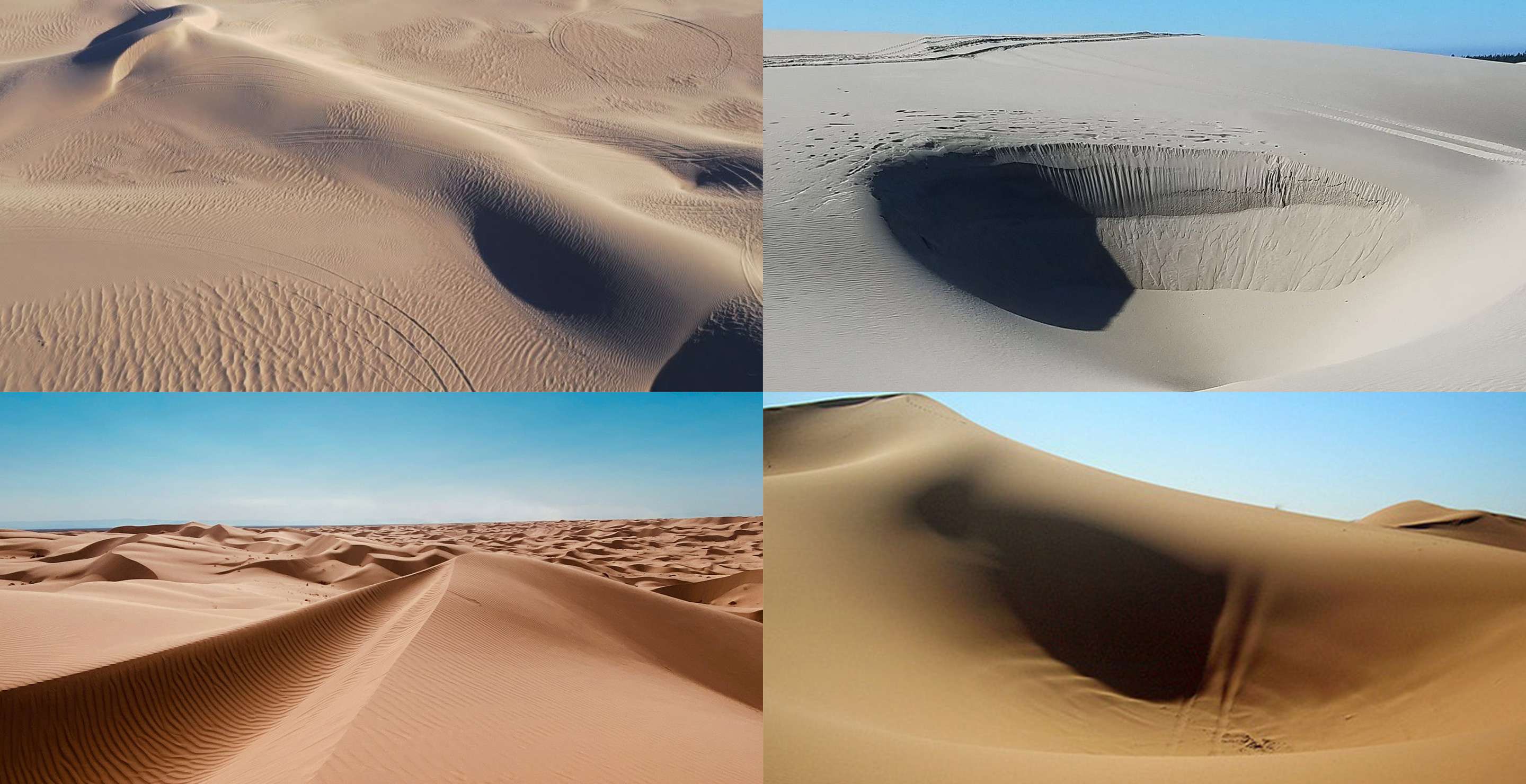
Witches Eyes
You reduce that risk by scanning several dunes ahead and by never driving straight over the top of one. Instead, crest at roughly a 30–45° angle, which leaves you room to turn away if something unexpected appears on the other side.
A good line comes from reading the dunes, matching them to the vehicle, and checking the view ahead. The obvious line isn't always the one that holds up.
And that read has a shelf life.
The same section of dunes can look different later in the day. Wind changes the surface. Traffic churns it up. The sun's angle changes what you can see. A place you know well can still require a fresh look.
Dune Trips Need Different Preparation
You pack for the conditions you expect and for the things you hope never happen.
Water is an absolute necessity, and lots of it. So are food and sun protection, along with anything else that keeps you functional through a long day away from pavement. Even during sand season, it can get hot out in the dunes. Heat changes how quickly a minor inconvenience can become a real problem, particularly when you are farther from camp or services than you expected.
Don't count on cell coverage. You need another way to communicate with others when you get separated from your group or something goes wrong. Radios are common for a reason, but whatever you carry has to work in the area you're riding. Navigation gets harder, too, since there are no “trails” on the dunes and a planned route can disappear once you are surrounded by similar-looking ridges and bowls.
A broken axle, damaged tire, or an overheating engine can end the day no matter how well you planned it. Your preparation should leave you with a realistic answer to three questions: Can you fix it? Can you wait it out? Can someone find you?
There's always a tradeoff between going light and carrying more. How much you bring depends on where you are going, who you are going with, what others in the group are bringing, and how long you plan on being out in the dunes.
Choosing a Dune Area
Choosing a dune area starts with the kind of trip you want to have. Your vehicle and the season narrow the list first, followed by the area's access rules, fees, flags, services, crowds, and open or closed areas. Two places can both be called dune riding destinations and still offer very different experiences. The details below can change, so check the managing agency before you go.
Glamis (Imperial Sand Dunes), California
Glamis, or the Imperial Sand Dunes in California, is the obvious big-dune reference point. The terrain supports everything from casual riding to serious dune work, and the southern California location fits the October through March window well.
BLM requires a recreation permit for the Imperial Sand Dunes Recreation Area from October 1 through April 15. The permit is tied to the primary street-legal vehicle you used to get there. California also has separate OHV registration and non-resident permit requirements that can apply depending on the vehicle and its home-state registration. Safety flags are required throughout the recreation area, with whip masts extending 8 feet from the ground to the mast tip and carrying at least a 6-by-12-inch flag.
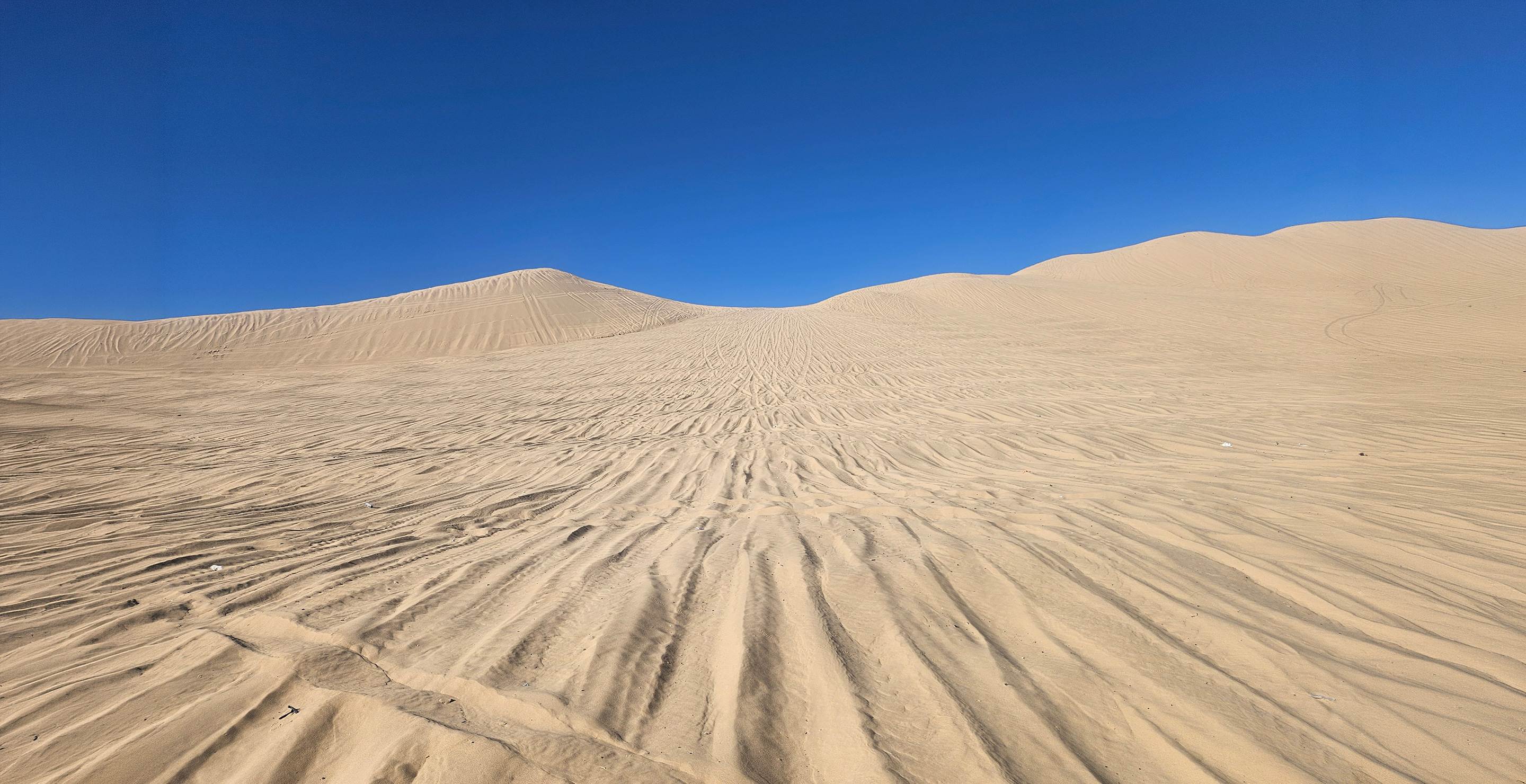
Oldsmobile Hill, Glamis
Dumont Dunes OHV Area, California
Dumont Dunes sits in a remote stretch of the California desert north of Baker and covers 7,620 acres of BLM-managed open riding. The terrain is built around big bowls, steep climbs, and flowing transitions, and camping is allowed anywhere in the open area for up to 14 consecutive days. Dumont is a fee site, and a weekly pass currently costs $30, or $40 during holiday weeks, with a season pass also available. Vehicles must be registered or permitted for OHV use in California, and flags are required on every OHV in the recreation area. Summer highs run 100 to 120 degrees, winter nights can drop below freezing, and wind is frequent and strong. Cell service is unreliable, and supplies are available in Baker, Shoshone, and Pahrump.
Sand Mountain Open OHV Area, St. George, Utah
The St. George area is southern Utah's smaller option. The Sand Mountain Open OHV Area sits next to Sand Hollow State Park and combines open riding with more technical terrain, which suits a day when you want sand without making the entire trip about a massive dune field. The BLM-managed Sand Mountain area currently has no BLM fee, although other requirements can apply depending on the vehicle and where you ride. Entering the adjacent Sand Hollow State Park is a separate matter and currently costs $25 per Utah-registered vehicle for day use.
Little Sahara Recreation Area, Utah
Little Sahara in Utah has broad dune riding and works for a wide range of machines and riding styles. Its prominent 700-foot dune is also called Sand Mountain, which is a different place from the St. George area. Four developed campgrounds have drinking water and restrooms, and dump stations are available. The recreation area is open year-round, and the use fee is currently $18 per vehicle per night, with an annual vehicle pass also available.
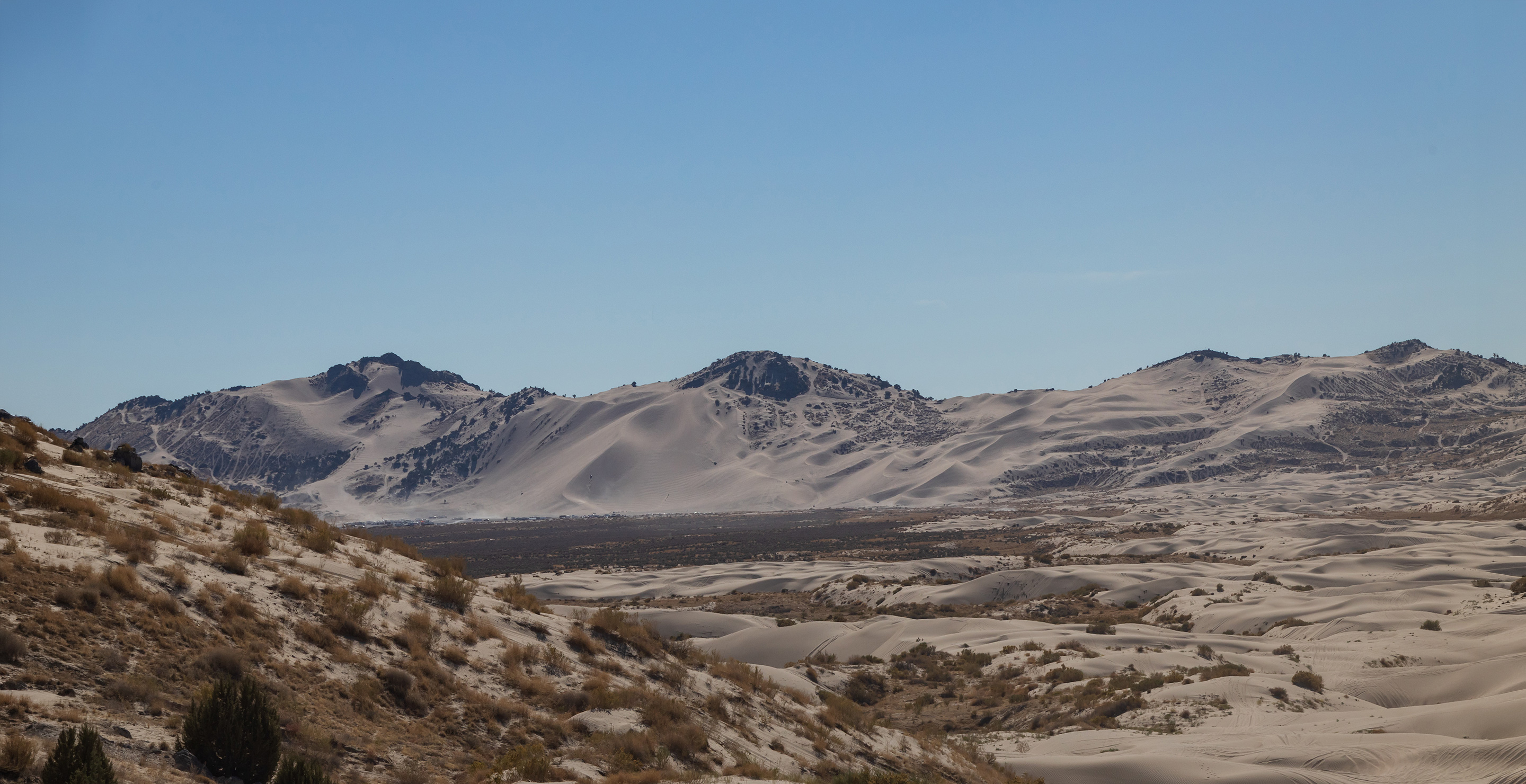
Sand Mountain, Little Sahara, Utah
Coral Pink Sand Dunes State Park, Utah
Coral Pink Sand Dunes State Park near Kanab, Utah sits at about 6,000 feet and offers designated OHV riding alongside non-motorized recreation. The park requires a whip flag on OHVs, and Utah's dune regulations call for the flag to be at least 6 by 12 inches and mounted at least 8 feet above the ground. The park is open year-round, although its higher elevation makes winter conditions more of a consideration than at the lower-elevation Utah options. Day use is currently $15 per vehicle, while camping is separate.
White Wash Sand Dunes, Moab, Utah
White Wash near Moab fits when you want sand as part of a larger desert riding area rather than an all-dune destination. The BLM open OHV area covers about 1,400 acres, with the dunes themselves designated for open OHV use. Outside that open area, motorized travel must stay on designated roads and trails. There is currently no BLM fee for the area.
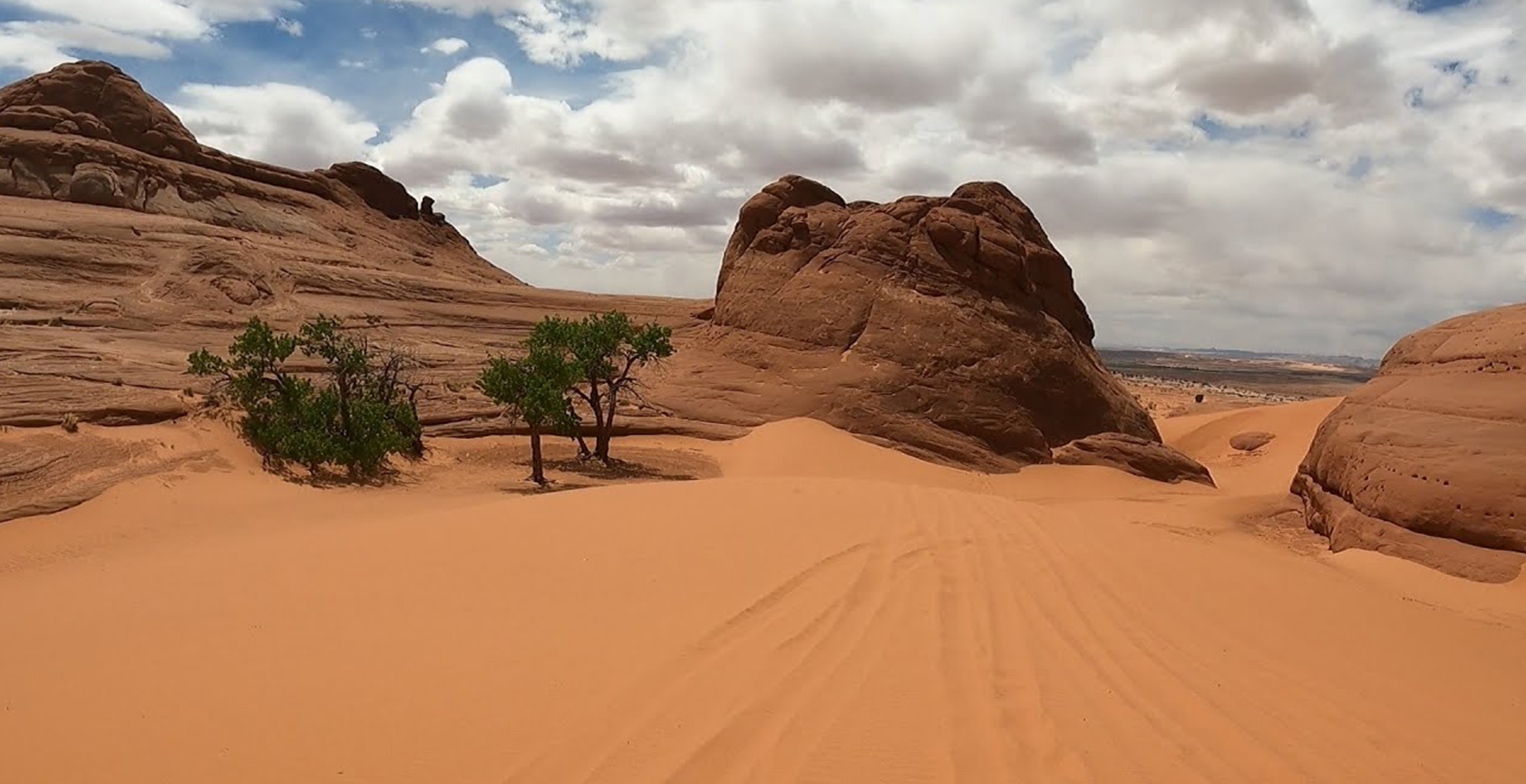
White Wash Sand Dunes - Utah
The Rhythm of the Dunes
A day in the dunes has a rhythm.
You air down, head out, work out how the sand is behaving, start getting comfortable with the machine, and find a perfect line through the dunes. Then the sunlight changes. The wind moves some sand. A familiar crest looks different from the other direction.
The dunes give you plenty of room to have fun. Dig in for the day, not the night.
John Thies
Founder / CEO
John is the Founder of Outryd and an avid wheeler. He is a lifelong off-road and outdoor enthusiast. When he's not on the dirt chasing his next off-road adventure in his SxS or Bronco Raptor - he's spending time with family, friends, and quite possibly chasing a white ball around the golf course.
Out·ry·der |'aut-ˌrī-der|
noun
An Outryder believes the best adventures are co-built. Not just by the trails taken, but by the knowledge shared. They believe in clarity over uncertainty. In access over ego. In connection over competition. With curiosity as their compass, and community as their guide.