Download
Unlock your outdoors
Open the camera on your mobile device and place the QR code in the camera's "view”
The Complete Beginner's Guide to Off-Roading: Everything You Need to Know to Get Started
Published: Jun 15, 2026
The Complete Beginner's Guide to Off-Roading
Off-roading is a welcoming, community-driven sport that offers something for every style and experience level. Are you just getting into the sport and not sure how to get started? We’ve got you covered. This guide walks you through the basics of off-roading, including determining what your vehicle can handle, how to prepare, what to bring, and how to respect the trails.
Never Ride Alone
Whether you’re a complete novice or an experienced off-roader, the first rule of thumb is - Never Ride Alone. If something breaks, you get lost, or things generally go south, it’s imperative to have someone with you who can help get you out of a bind and back to safety. As a beginner, it’s always best to join a riding group who has more experience and can teach you along the way. And whenever off-roading, make sure you have a way to communicate with your crew (short-range radios) and the outside world (cell or satellite phone).
If something breaks, you get lost, or things generally go south, it’s imperative to have someone with you who can help get you out of a bind and back to safety.
Choose a Type of Off-Roading
One of the great aspects of this pastime is that there are a variety of off-roading trails you can explore. The terrain you choose will determine what kind of vehicle setup and capabilities are required. Some offer entry-level experiences, while others require a bit more equipment and skill.
Light Trails
Unpaved roads get you out into nature without much chance for trouble, so they're a great place to start if you want to ease into the sport. You can find interesting dirt and gravel roads in county or state parks, as well as forest roads and fire roads. Just be aware that some require a permit or other type of permission to access.

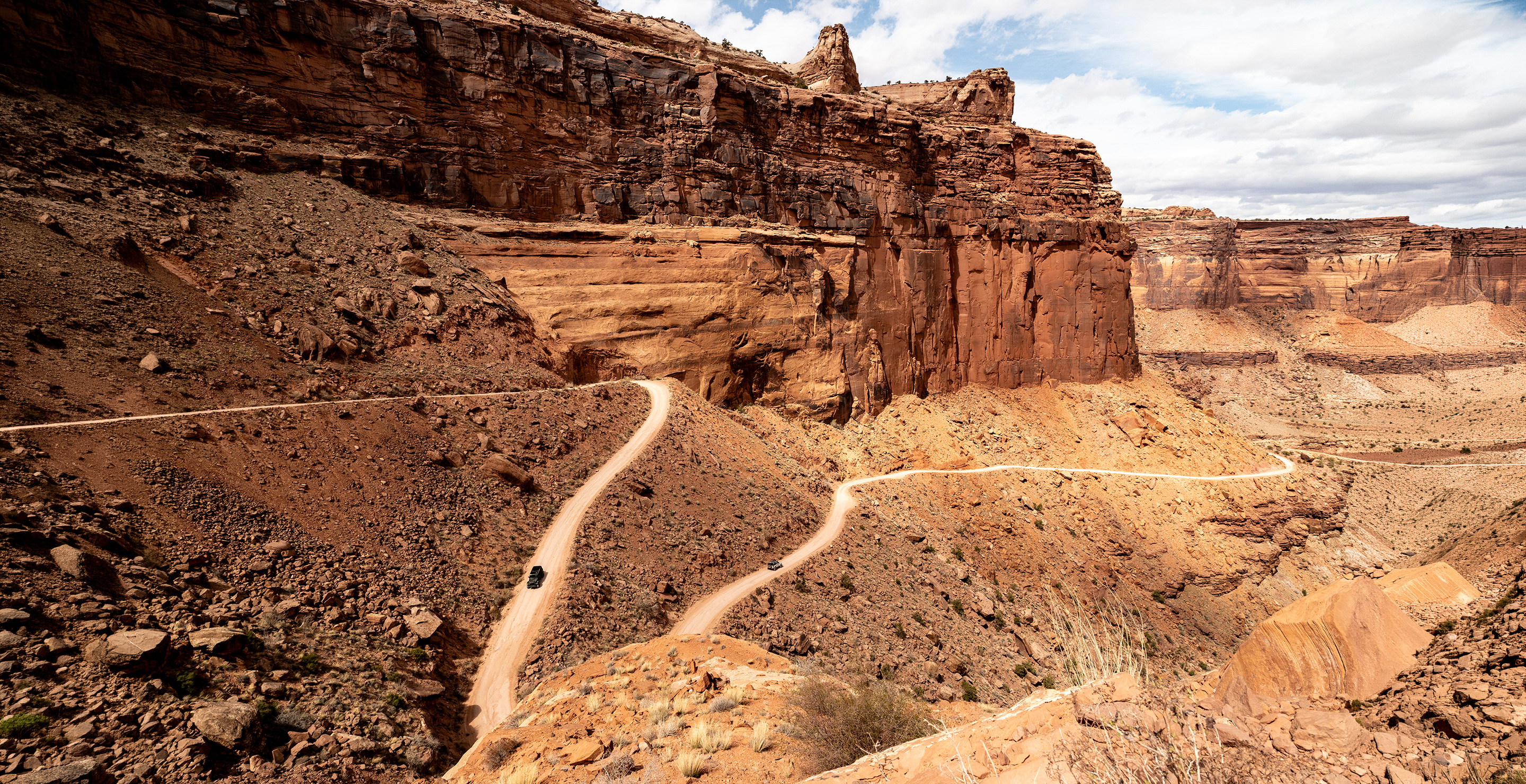
White Rim - Moab, UT
Four-Wheeling
Four-wheeling is what a lot of people first think of when they picture a 4x4. It’s a technical form of off-roading that requires skill and patience in equal quantities. Speeds are usually sedate, letting you take in the sights. Off-roaders help each other pass difficult sections by acting as each other’s spotters, and four-wheeling often involves water crossings, which are their own challenge.
Rock Crawling
Rock crawling is a more extreme form of off-roading that requires more skill to navigate the larger obstacles encountered. Vehicles used, often referred to as “buggies”, require bigger tires and lifts, beefy axles, roll cages, upgraded suspension, winches, and reinforced chassis to make it out the other side. This type of off-roading is about slow-speed, precise driving. Rock crawlers often drive up, over, and across obstacles that appear to be near impassable.
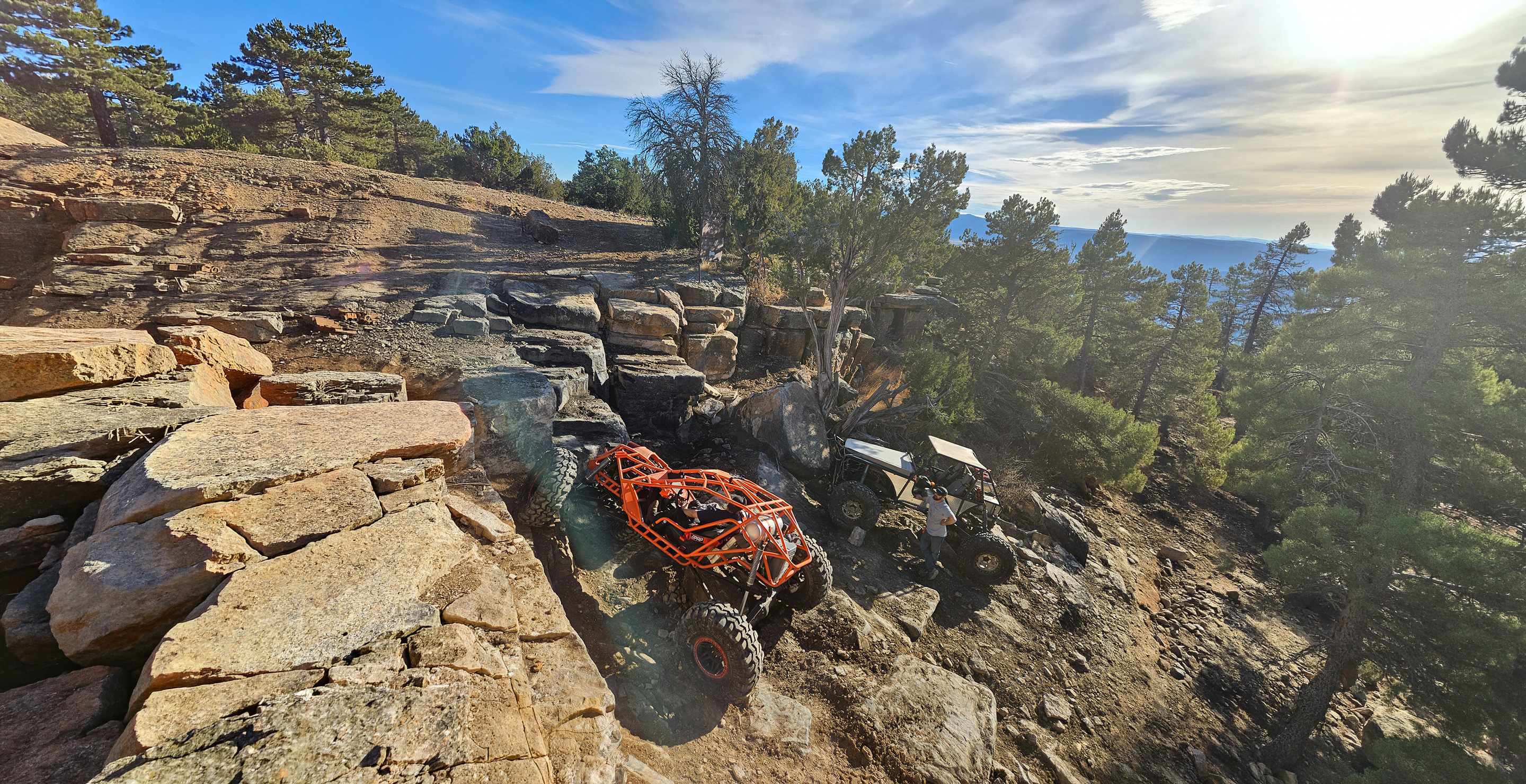
Patriot Trail - Penrose, CO
Overlanding
Overlanding combines the best parts of terrain conquering with one or more nights out in the wilderness. It could be as simple as driving down a fire road to get to a remote spot to set up camp, or overlanding can require serious four-wheeling to get to the next destination. Because overlanding is a multi-day affair, it requires more gear—a ground or roof-top tent, or a mattress you can set up in your vehicle—as well as ample supplies of food and water.
Mudding
As the name suggests, mudding involves driving across wet, muddy terrain, usually at a high rate of speed. Competitive "mudders" often use special, scoop-like tires that can fling the mud and dirt to keep the vehicle afloat. Mudding is generally done in a group setting on private property, with competitions for how far and fast a vehicle can get across a mud pit. Mud bogging vehicles are highly specialized; because of the size and weight of their tires, they use heavy-duty axles and extra-powerful engines to accomplish their task. If you think mudding might be for you, find a local event and check it out first-hand. You're likely to meet folks happy to explain things to you, and at the very least it's always a fun spectator sport with an energetic, party-like atmosphere.
Dune Riding
Dune riding is an off-road activity that involves driving specialized vehicles, such as dirt bikes, ATVs, side-by-sides, or sand rails, on sandy terrains like sand dunes. It offers thrilling experiences as riders navigate steep hills and soft sand, often requiring specific techniques and vehicle modifications. A standard 4x4 vehicle can drive on dunes as well, however, some adjustments like tire pressure will need to be made to ensure a safe and fun experience.
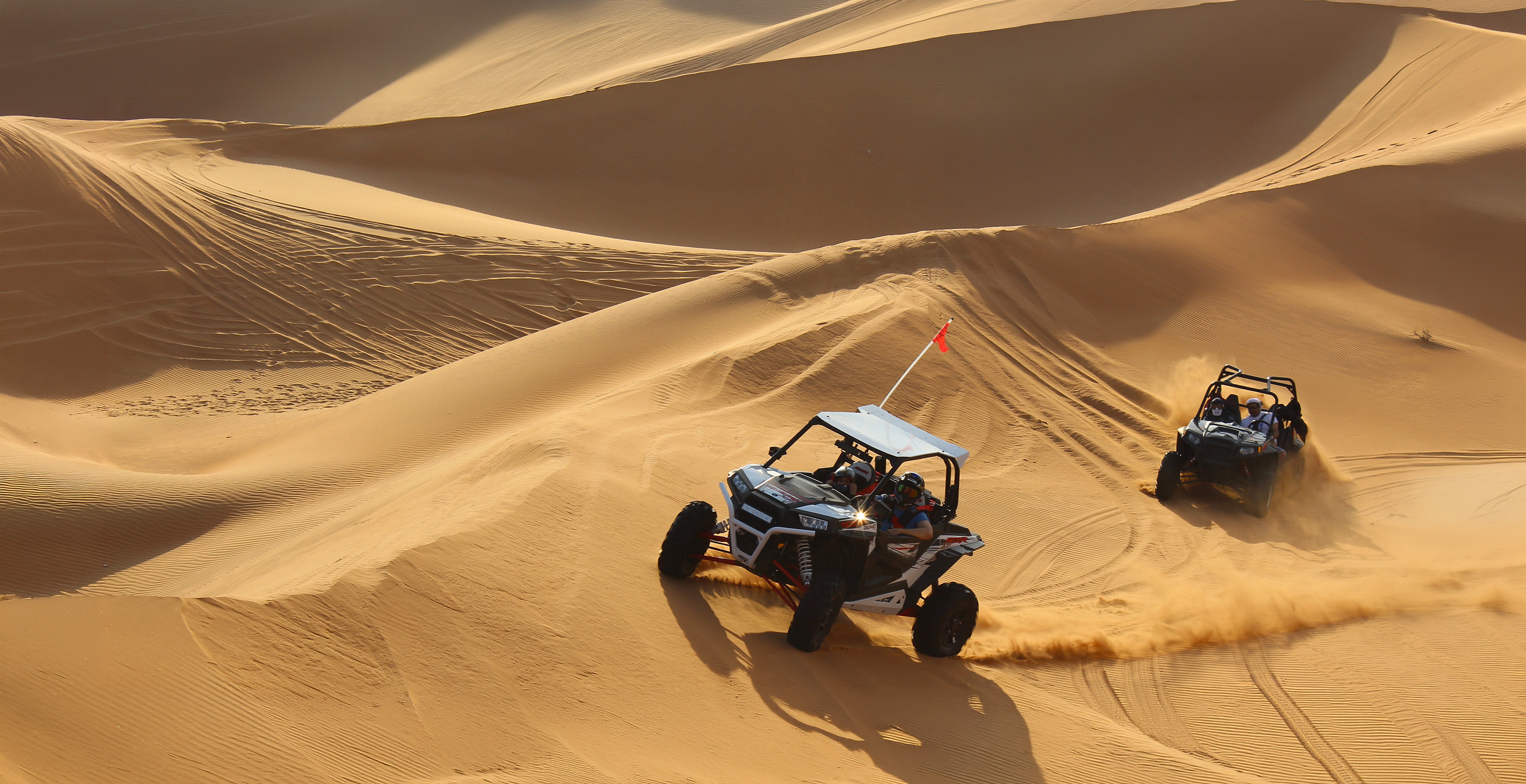
Glamis Sand Dunes - Imperial County, California
Know Your Vehicle's Capabilities
Like with other sports, off-roading requires the right tool for the job. Before heading for the dirt, understanding what your vehicle can—and can't—do is the first step in keeping yourself and everyone around you safe. Stock vehicles, even if they don't have special off-road packages or high-dollar upgrades, can be plenty capable off the pavement.
Regardless of which category your vehicle fits into, be sure to understand its capabilities and limitations before putting it to use. You might even want to read the owner's manual to help familiarize yourself with features like the various modes, locking differentials, and the procedure to shift into four-wheel drive, if applicable. Here are some things to keep in mind when deciding what you and your rig are up for. Note, this is just a high-level overview and not an inclusive list of things to consider before hitting the trails.
Regardless of which category your vehicle fits into, be sure to understand its capabilities and limitations before putting it to use.
2WD
Even two-wheel-drive vehicles can make it over difficult terrain as long as they have the necessary ground clearance. For instance, Baja racers such as Trophy trucks often use rear-wheel drive for simplicity and to reduce vehicle weight. Toyota's TRD PreRunner models are set up from the factory to, well, pre-run desert races; they're built with off-road suspensions and everything else you'd expect on a 4x4 but just lack a driveshaft leading to the front.
AWD
All-wheel drive is a street-friendly system that you'll find on most crossover SUVs and even some luxury and sports sedans. An all-wheel-drive system uses various sensors to determine which wheels are slipping and which have grip and then sends the powertrain's torque where it can be used. To save fuel, many all-wheel-drive systems default to two-wheel drive until they're called upon to act, for instance when taking off from a stop in snowy or icy conditions. Though AWD vehicles are generally less capable than traditional 4x4s, they can still handle unpaved roads and some less extreme obstacles with ease.
4WD
Four-wheel-drive vehicles, or 4x4s, are designed to power all four wheels simultaneously, enhancing traction and control. When the driver engages the transfer case, it locks the front and rear axles to send torque to both ends. These so-called part-time systems let you shift into 4WD when it's needed and back to 2WD when you don't. Many four-wheel-drive vehicles can also be shifted into a 4L/4Lo/Low setting, which further multiplies the powertrain's torque output and is meant for low-speed use. Beyond that, some off-road vehicles have locking front, rear, and/or center differentials that keep the torque evenly split front to back or side to side to help in stickier situations, for instance, when at least one wheel is off the ground or when rock crawling.
Because four-wheel drive locks the front and rear together, it's not meant for use on dry pavement, as the inside wheels of a vehicle need to turn more slowly than those on the outside when changing direction on a high-grip surface. Leaving a 4x4 in 4WD in situations where it's not intended to be used can cause damage to the driveline and unnecessary wear to the tires.
Decide Where to Go
Once you understand where your vehicle can take you, it's time to decide on a destination. We'll reiterate that it's best to start out in light terrain so you can familiarize yourself with how the vehicle operates and behaves before getting into a situation that requires more skill or additional modifications.
There are lots of websites and guidebooks that have trail directories, and many will include a difficulty level to help you gauge whether it's right for you. At Outryd, we provide trail mappings, with ratings, directly within our mobile application. You can also check out your local state and national parks or forests, too. Local off-roading clubs are also a great resource, and many organize rides that can help get you going with some support.
At Outryd, we provide trail mappings, with ratings, directly within our mobile application.
Pack Essential Gear
Hope for the best but prepare for the worst. Things can go wrong on the trail, so it's wise to bring along equipment that can help get you out of a jam and keep you safe along the way. Here's an overview of the essentials to pack for an off-road excursion.
- First-aid kit
- Fire extinguisher
- Extraction tools - shovel, traction boards, high-lift jack for vehicles with lifted suspensions
- Tire repair kit and/or spare tire, air compressor
- Means of communication - short-range communication radios within a group, and a fully charged cell phone is a must, preferably one with satellite capabilities
- Appropriate clothing - dress in layers and make sure what you're wearing protects you form the sun
- Food and water - even if you're just going out for a short trip, bring extra provisions in case things don't go as planned
- Maps - paper maps aren't subject to dead batteries, so take one along even if you plan to use a navigation system or some other digital device
- Extra power - speaking of devices, it's good to have a power brick or a solar charger in your pack in case your phone's battery dies (a frequent occurrence in areas with little to no cell signal, as the cell radio will constantly be searching for a connection and drain the juice)
- Flashlight - if day unexpectedly turns into night or you need to peer into an enclosed space to make a repair, a flashlight can be a lifesaver; look for one that's rechargeable through USB or be sure to bring extra batteries
Wheel Responsibly and Leave No Trace
As with any outdoor activity, the goal when off-roading is to leave nature how you found it. By working together, we can ensure continued access to trails and the future health of the sport.
A non-profit called Tread Lightly! provides guidance on responsible trail use and supports volunteer-led initiatives to improve and clean up off-road trails across the country. Their TREAD principles are a quick shorthand to help you remember what to do:
- Travel Responsibly: Stay on marked trails and don't blaze a new path to get around an obstacle. Be aware at water crossings and avoid wet and muddy trails if possible to prevent damage.
- Respect the Rights of Others: This includes owners of private property, other recreational trail users, and campers. Know when to yield right of way.
- Educate Yourself: Plan your trip with maps and info from any applicable public agencies.
- Avoid Sensitive Areas: Don't disturb wildlife habitats and choose your route to avoid any potential erosion or damage to trails.
- Do Your Part: Model the behavior you want to see in others. Pack out all trash and pick up anything you find along the way even if it's not yours. If you damage a trail, make it right.
Other organizations, such as Stay the Trail, support responsible OHV (off-highway vehicle) recreation at the regional level, focusing on education and outreach within the community.

John Thies
Founder / CEO
John is the Founder of Outryd and an avid wheeler. He is a lifelong off-road and outdoor enthusiast. When he's not on the dirt chasing his next off-road adventure in his SxS or Bronco Raptor - he's spending time with family, friends, and quite possibly chasing a white ball around the golf course.
Out·ry·der |'aut-ˌrī-der|
noun
An Outryder believes the best adventures are co-built. Not just by the trails taken, but by the knowledge shared. They believe in clarity over uncertainty. In access over ego. In connection over competition. With curiosity as their compass, and community as their guide.