Download
Unlock your outdoors
Open the camera on your mobile device and place the QR code in the camera's "view”
The Off-Road Essentials Checklist
Published: Jul 13, 2026
The Off-Road Essentials Checklist
Hope for the Best, Prepare for the Worst. Planning and preparation are key elements in the sport of off-roading. No one wants to be stranded in the middle of nowhere or have to hike out of a trail for miles to get help. Before setting off on your next off-grid adventure, make a checklist to ensure you have everything that you will or might need for your journey.
With that in mind, we’ve created an off-road essentials list to get you started. Not every piece of equipment is necessary for every type of trip, and you can build up your gear as you progress onto more difficult terrain.
A lot of the gear included in this list is of no use if you're unfamiliar with its operation. Read the instructions and try things out before you hit the dirt so you're ready for whatever comes your way. We recommend buying good, quality equipment that will last, whether it gets used or not.
Personal Gear
You'll want to bring more than the clothes on your back. If it's an overnight trip, be sure to add tents, sleeping bags, and toiletries.
- Appropriate Clothing - dress in layers and make sure what you're wearing protects you from the sun. It’s also recommended to bring extra warm clothes.
- Sun Protection - sunscreen is a must, and it's a good idea to bring something to provide shade when stopped, especially for those riding in open-topped vehicles.
- Blankets - it can get cold at night, so pack something to retain heat if you end up out past dusk; space blankets take up less space and are designed to retain heat.
Navigation and Communication
Know where you are and know where you're going. We recommend always traveling with a group – Never Ride Alone - and it's important to be able to communicate with each other on the trail. We also suggest telling someone outside of your travel group where you are going and when you plan to be back. That way if something does go south, they can notify the appropriate rescue and recovery groups.
- Means of Communication - short-range communication radios within a group, and a fully charged cell phone is a must, preferably one with satellite capabilities.
- Maps - going old-school on this one - paper maps aren't subject to dead batteries, so take one along even if you plan to use a navigation system or some other digital device.
- GPS - an off-road-specific GPS unit is nice to have, as it will show where the trails are and not just the roads to get you there, plus you can rely less on your phone.
- Satellite Communication – when off-roading, at some point, you will be outside of your cell network. Bring along a two-way satellite communication device to contact the outside world when needed.
Emergency Supplies
Hopefully you won't ever need these items, but they're must-haves for those "just in case" situations.
- First-aid Kit - always bring a fully stocked kit with bandages, gauze, and basic medications, plus a first-aid guide to walk you through procedures; if you're bringing the family dog along, pack a canine-specific kit as well.
- Fire Extinguisher - even a small fire can turn into a big problem, so make sure this is charged and accessible before heading out. A fire extinguisher is considered charged if the pressure gauge is in the green zone, indicating it is properly pressurized and ready for use.
- Food & Water - bringing adequate food and water is a key element in the preparation of any off-road adventure. Ensure you have enough to last throughout your trip, plus some extra in the event the trip goes longer than anticipated.
Tools and Spares
Being able to fix your vehicle may mean the difference between driving back to the trailhead and hiking out. Like the scouts say, be prepared.
- Tool Kit - a small mechanic's tool set, either in a hard case or soft bag, should include basic tools like pliers, screwdrivers, wrenches, and ratchets with sockets; make sure yours has standard and metric sizes because you never know whose vehicle you'll need it for.
- Spare Tire - while some tire issues can be patched, you'll want to have an extra tire mounted to a full-size wheel for issues that can't be remedied on the trail.
- Tire Repair Kit - a small hole in a tire's sidewall is sometimes easier to patch than swapping in a new wheel and tire; also necessary when you've already used that spare setup.
- Tire Deflator - these allow you to quickly and accurately reduce tire pressure, which enhances traction and improves vehicle performance on challenging terrain. Reducing tire pressure will also help prevent tire damage and provides a smoother ride over rough surfaces.
- Air Compressor - if you air down before the trail, you need to air back up after; a compressor is also necessary if you have a slow leak or your spare isn't at the right pressure.
- Tire Pressure Gauge - even if your compressor has a built-in gauge, having a quality analog one means you'll never be reliant on batteries and you'll probably get a more accurate reading.
- Spare Parts - these are especially important if you're wheeling something with a lot of miles and adventures behind it; common failure points like belts, hoses, and air compressors provide extra peace of mind when you're far from a repair shop.
- Battery Jump Pack - an electrical issue leading to a dead battery will stop you in your tracks, so have a charged pack ready to resuscitate it if needed; some jump packs have USB ports to double as backup for devices, so you can pack one less thing.
- Extra Fuel - for those longer trips, an extra gas can is a necessity - especially when running tough, technical trails. When going up a steep obstacle, if you don't have enough fuel in the tank, the engine could choke out.
- Flashlight - if day unexpectedly turns into night or you need to peer into an enclosed space to make a repair, a flashlight can be a lifesaver; look for one that's rechargeable through USB or be sure to bring extra batteries.
- Fire Starters - a cold night can be a long night, so you may need to make a fire to keep warm; just be sure to respect any permanent or temporary fire bans where you are located.
- Zip Ties – probably the most versatile component of this checklist from emergency fixes to securing loose equipment. They are lightweight and take up minimal space in your gear. Every off-roader should have these stored somewhere in their rig.
Recovery Gear
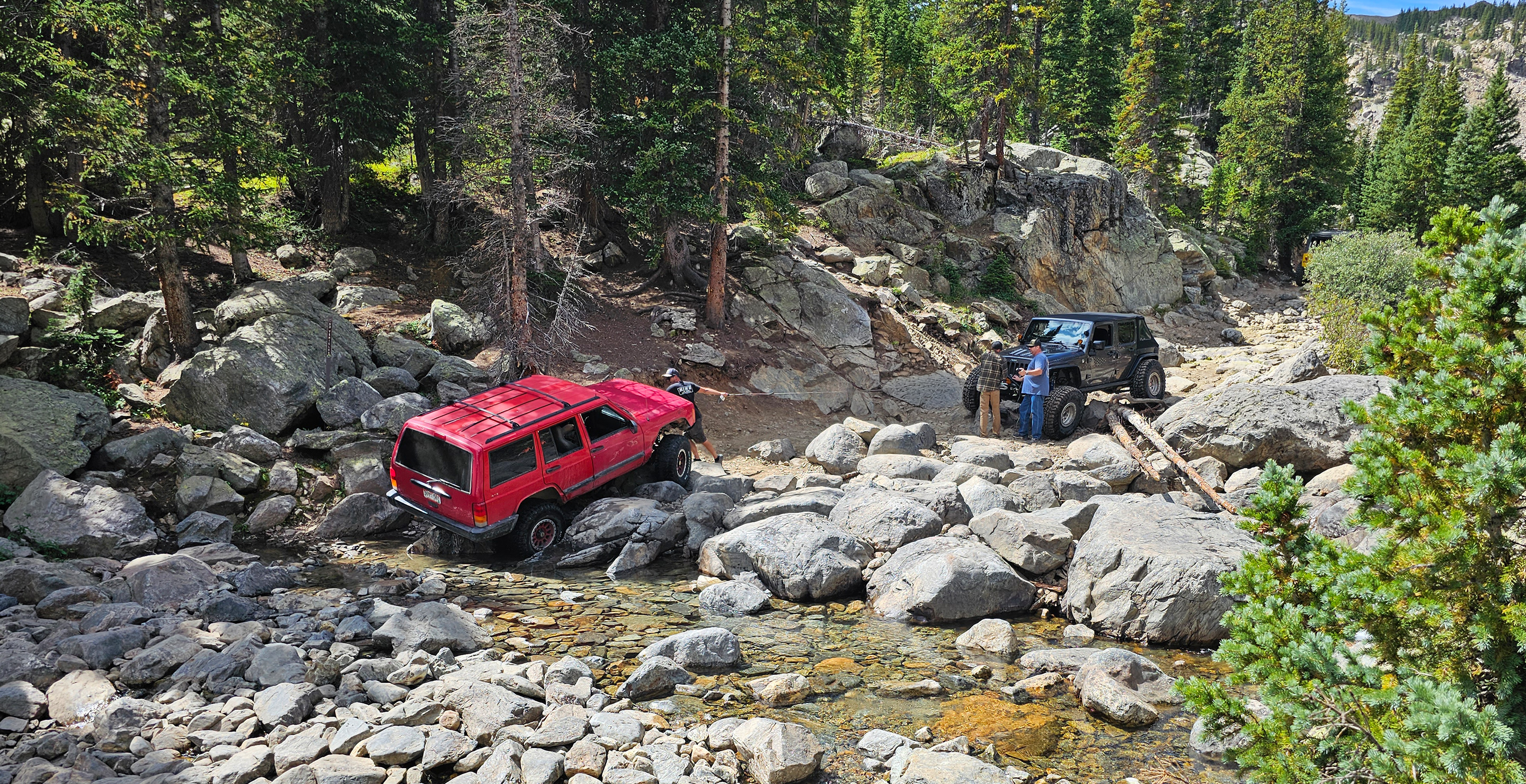
No one plans to get stuck, but with off-roading, it's not a matter of "if" but "when". So, pack the right gear that will get your rig, or your buddies, out of a sticky situation.
- Shovel - sometimes the best way out is to dig, and you may need to make space for a few traction boards under a tire or two.
- Traction Boards - these help give your tires something to bite when stuck in loose dirt, sand, mud, or snow.
- High-lift Jack - especially important for vehicles with lifted suspensions; that scissor jack that came with the stock vehicle won't do.
- Tow or Recovery Strap - have a safe way to hook your vehicle to another to provide extra pulling power. Two popular recovery tools are kinetic ropes and straps.
- Shackles and Hitch Links - you need a way to connect the strap at either end; soft shackles are the best option, as they're easier to use and safer than metal ones.
- Winch - an electric winch can get your or another vehicle unstuck in certain situations where manpower just won't do; make sure at least one vehicle on the trip is equipped with one.
- Tree Protector - Leave No Trace matters even in an emergency, so wrap the tree you're using as a winch point to protect it.
- Earth Anchor - if there are no trees around, you can use this device to dig into the dirt and provide a bite location for the winch cable.

John Thies
Founder / CEO
John is the Founder of Outryd and an avid wheeler. He is a lifelong off-road and outdoor enthusiast. When he's not on the dirt chasing his next off-road adventure in his SxS or Bronco Raptor - he's spending time with family, friends, and quite possibly chasing a white ball around the golf course.
Out·ry·der |'aut-ˌrī-der|
noun
An Outryder believes the best adventures are co-built. Not just by the trails taken, but by the knowledge shared. They believe in clarity over uncertainty. In access over ego. In connection over competition. With curiosity as their compass, and community as their guide.