Download
Unlock your outdoors
Open the camera on your mobile device and place the QR code in the camera's "view”
Is Wheeling Alone Actually More Dangerous?
Published: Aug 25, 2026
Is Wheeling Alone Actually More Dangerous?
If you've spent much time in the off-road community, you've probably heard the term "Never Ride Alone" - or something similar.
It's advice that's been around since the beginning, and for good reason. A simple mechanical problem that would be an inconvenience with another person to help could be a much bigger problem when you're out on your own. The same goes for getting stuck, breaking something on your rig, losing communication, or simply finding yourself in a situation you didn't expect.
But there's another side to the conversation.
Plenty of experienced off-roaders wheel alone. They know their vehicles, understand their capabilities, are familiar with the terrain, carry the appropriate equipment, and know when it's time to turn around. For some people, a day alone on the trail is simply how they choose to enjoy it.
That begs the question: is wheeling alone actually more dangerous?
Why the Term "Never Ride Alone" Exists
The easiest way to understand why it has become such common advice is to think about what additional people and vehicles bring to the off-road experience.
The obvious answer is recovery. If your vehicle becomes disabled, having a second vehicle there can give you options that simply don't exist when you're alone. If you have a mechanical problem, another person may be able to help diagnose it, have the tools to make a repair, or get you somewhere so you can deal with the issue.
But recovery is only part of it.
Another person gives you a second set of eyes, and that can be surprisingly valuable on the trail. A driver sitting behind the wheel has a very different view of an obstacle than someone standing outside the vehicle. That's one of the reasons spotting is such an important part of off-roading.

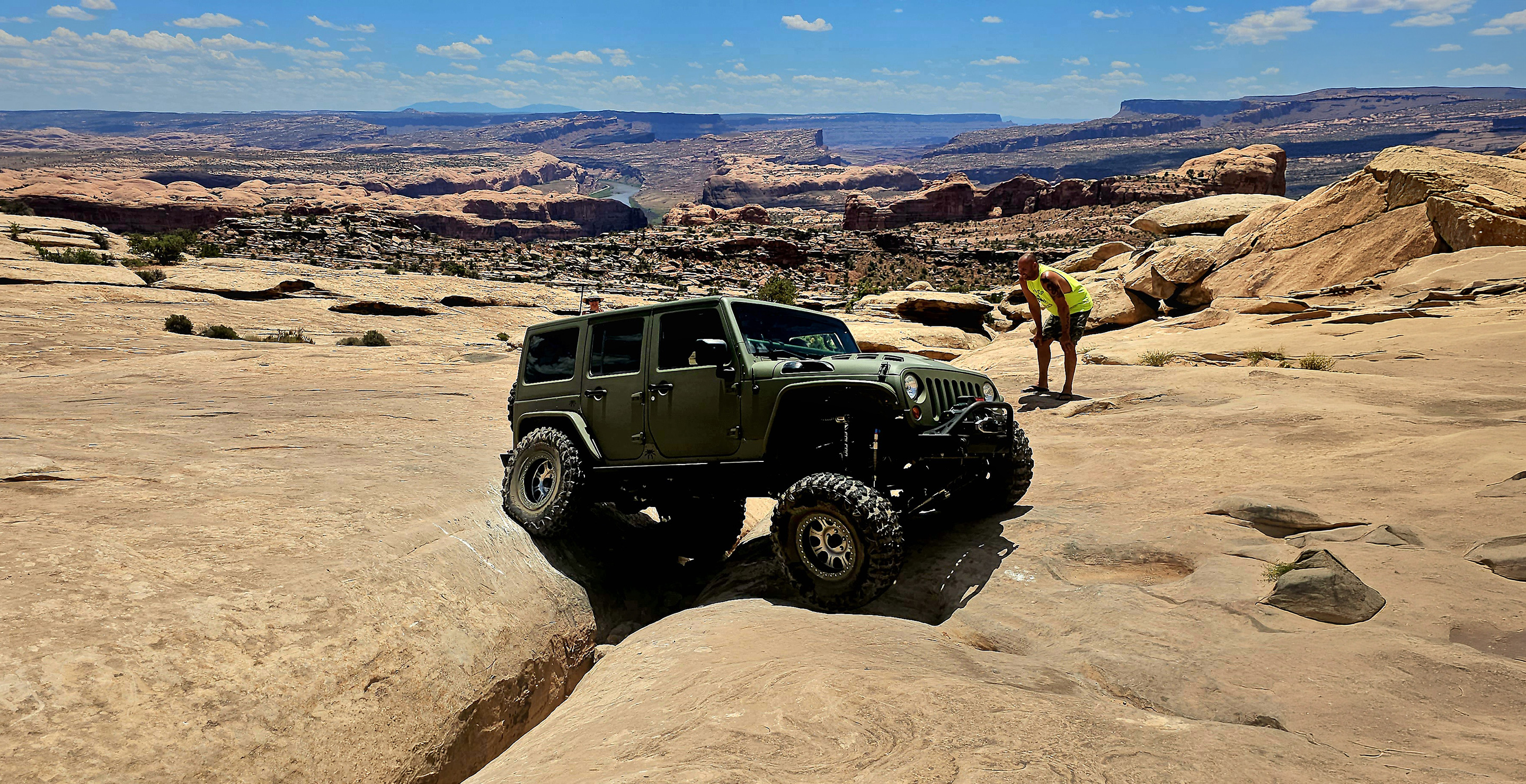
Golden Spike / Golden Crack - Moab, UT
As we covered in How to Be the Spotter Every Driver Wants on the Trail, good spotting isn't just about telling someone where to drive. It requires communication, trust, an understanding of the vehicle and terrain, and the ability to stay calm when things don't go exactly as planned.
Sometimes the most useful thing another person brings is a second opinion - not just whether you can physically get over an obstacle, but whether you should even try. Is this the right line? Should you try a different approach? Has the trail difficulty reached a point where the driver is outside of their comfort zone?
The person standing next to you doesn't necessarily need to know the answer. Sometimes just having someone there to bounce ideas off is all you need. You still make the final call, but you're no longer making it entirely on your own.
That's the practical reason "Never Ride Alone" became such common advice: another person can bring capabilities and perspective that are difficult to replace when you're by yourself.
The Case for Going Alone
There are legitimate reasons people choose to wheel alone, and some of them have nothing to do with being more adventurous or taking greater risks.
For some, the appeal is simply the freedom. You can leave when you want, choose your own route, go at your own pace, and change your plans without coordinating with anyone else. There's no waiting for everyone in the group to finish airing down or getting everyone through an obstacle. It's just you, your vehicle, and the trail.
For some, the appeal is simply the freedom. You can leave when you want, choose your own route, go at your own pace, and change your plans without coordinating with anyone else.
Sometimes it's a practical choice, too. Getting a group together isn't always easy, and waiting until everyone else's schedule lines up can mean not going at all. If the alternative is leaving the vehicle parked in the garage, a well-planned solo trip is certainly a reasonable way to spend the day.
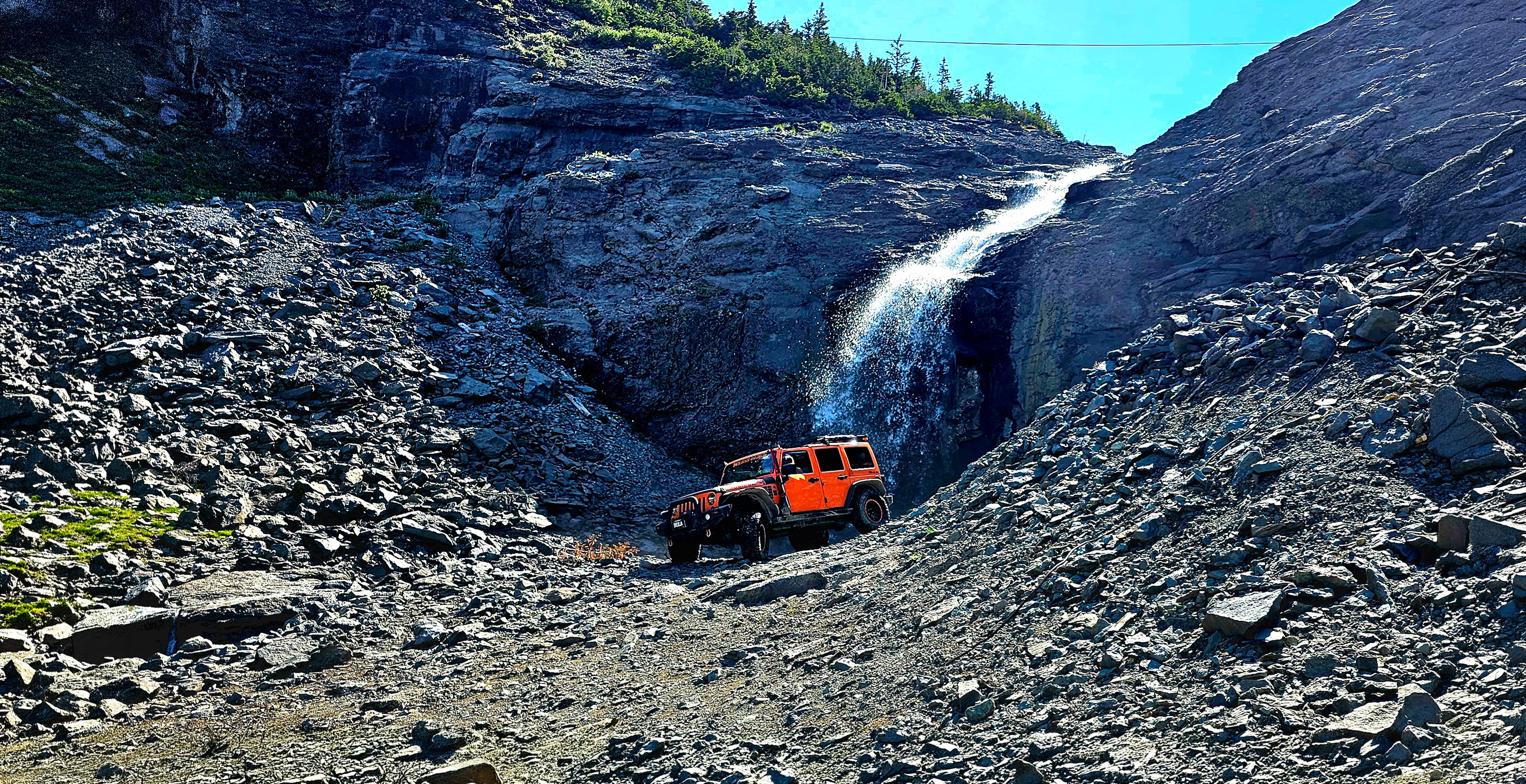
Black Bear Pass - Colorado
There's also something valuable about learning to be self-reliant. Understanding how your vehicle behaves, carrying the equipment to deal with potential problems, understanding the terrain, and knowing when to turn around are all part of becoming a more capable off-roader.
And the circumstances matter, too. A driver traveling a familiar forest road is dealing with a very different set of considerations than someone attempting a difficult obstacle deep in remote terrain. What makes sense for one person, vehicle, and trail may not make sense for another. So, the real question isn't whether solo wheeling is inherently a bad idea. It's what changes when you don't have anyone else there.
Being Alone Changes the Consequences
Solo wheeling doesn't necessarily make a problem more likely to happen. A mechanical failure, flat tire, or unexpected change in conditions can happen whether you're traveling by yourself or with a group.
What changes is what happens next.
When you're alone, you're working with the resources you have and your own decisions. A problem that would be manageable with another vehicle or person may become a much more daunting situation.
That's where preparation matters. Knowing your vehicle, understanding the terrain, carrying the equipment you realistically need, and having a way to communicate can all reduce the consequences of something going wrong. So can knowing when to turn around before things go beyond what you can reasonably handle.
But preparation has limits. You can carry recovery gear, tools, spare parts, and communication equipment. You can plan your route and share your itinerary. None of those things changes the fact that you're still the only person on the trail when something goes wrong.
That doesn't make solo wheeling unreasonable. It means the decision has to account for more than whether you think you can drive the trail. A familiar forest road presents a different set of consequences than a difficult obstacle several hours into remote terrain. The vehicle, the driver, the conditions, and the distance to the nearest town all change the calculation.
That's the part of solo wheeling that's easy to overlook. The question isn't only whether you're capable of handling the trail. It's whether you're comfortable with what happens if the plan stops working.
Is Wheeling Alone More Dangerous?
No, not inherently. But yes, in terms of consequence, we think going together is the better choice when the choice exists.
Solo wheeling can be a perfectly reasonable way to spend a day on the trail. The question is whether the additional freedom and independence are worth accepting fewer options when something doesn't go according to plan.
If the choice is between going alone and going with another person, we choose going together.
For us, that's where the balance tips. Another capable person doesn't make the trail safe, and going alone doesn't automatically make it reckless. But having someone beside you gives you another set of hands, another perspective, and another way to work through whatever the trail throws at you.
If we have the choice, we'll take the company.
What "Never Ride Alone" Means to Us
The practical reasons for off-roading with others are valid enough. But that's not why the idea sticks with us.
There's a different feeling when your friends are beside you - the confidence that comes from knowing they have your back before you even put your wheels on the dirt. Someone's spotting. Someone's figuring out the line. Someone's grabbing the tow strap or winch before you even ask. Everyone has a role, and together, you get through it.
Then there's the part nobody really plans for.
The busted part that turns into an afternoon repair on the trail. The obstacle that takes three tries and a few different ideas before you find the line. The person who talks you through something you weren't sure you could do.
Those are the moments that stick.
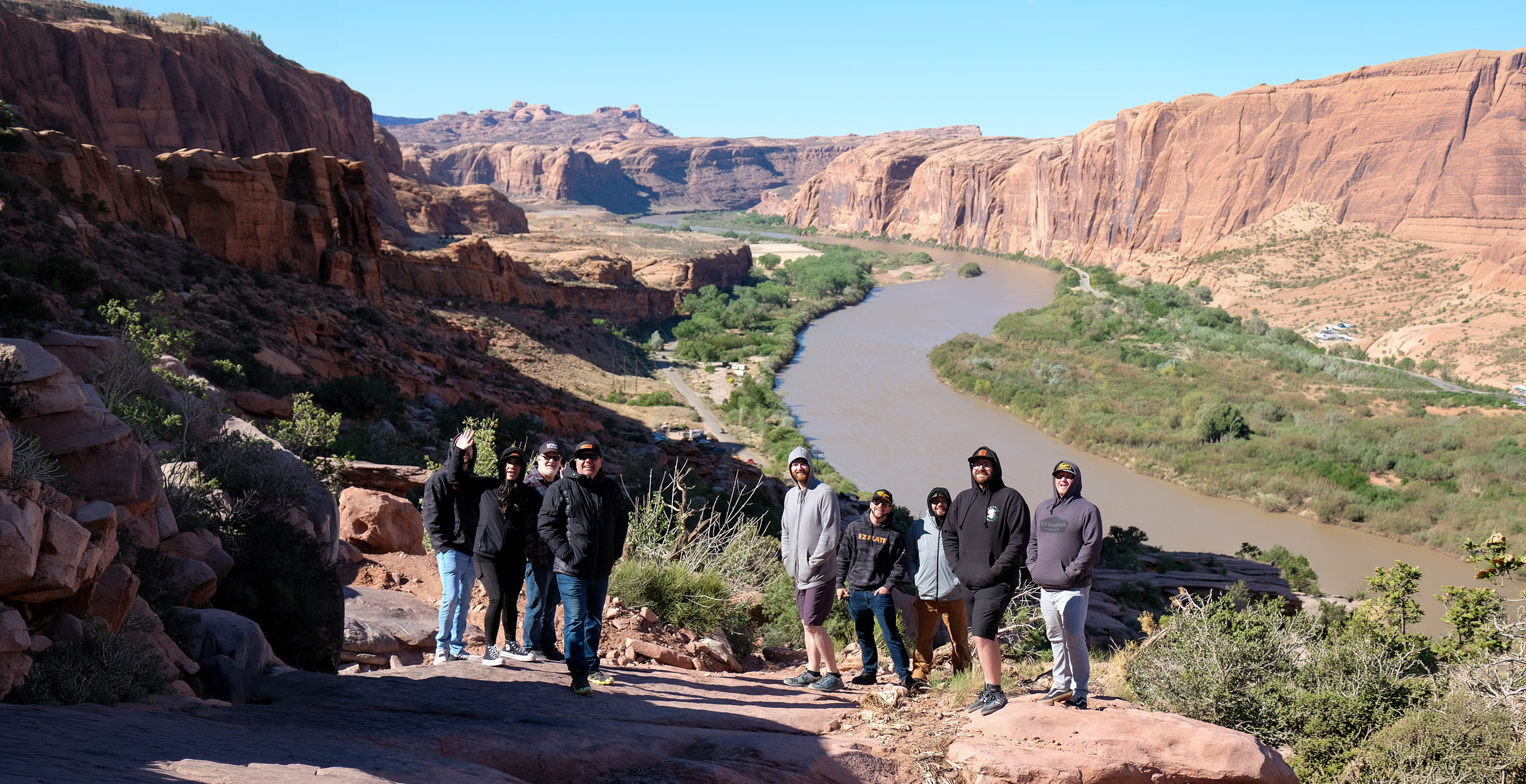
Friends of Outryd on Moab Rim - Moab, UT
Every obstacle gives you something to figure out. Your rig gives you something to learn. And the people you're with turn the journey into a story you'll be telling long after the tires are back on pavement.
That's why "Never Ride Alone" isn't a rule against solo trips. There are plenty of days when going alone makes sense, and every driver has to decide what works for them.
For us, it's a reminder that the best part of getting out there isn't always the obstacles you conquered or the destination. It's the people you shared it with and the things you figured out together.
The trail gives us the challenge. The people beside us are what make it worth remembering.
Never Ride Alone
John Thies
Founder / CEO
John is the Founder of Outryd and an avid wheeler. He is a lifelong off-road and outdoor enthusiast. When he's not on the dirt chasing his next off-road adventure in his SxS or Bronco Raptor - he's spending time with family, friends, and quite possibly chasing a white ball around the golf course.
Out·ry·der |'aut-ˌrī-der|
noun
An Outryder believes the best adventures are co-built. Not just by the trails taken, but by the knowledge shared. They believe in clarity over uncertainty. In access over ego. In connection over competition. With curiosity as their compass, and community as their guide.