Off-Road Rock Stacking: Two Camps, Same Rocks
Published: Oct 20, 2026
Off-Road Rock Stacking: Two Camps, Same Rocks
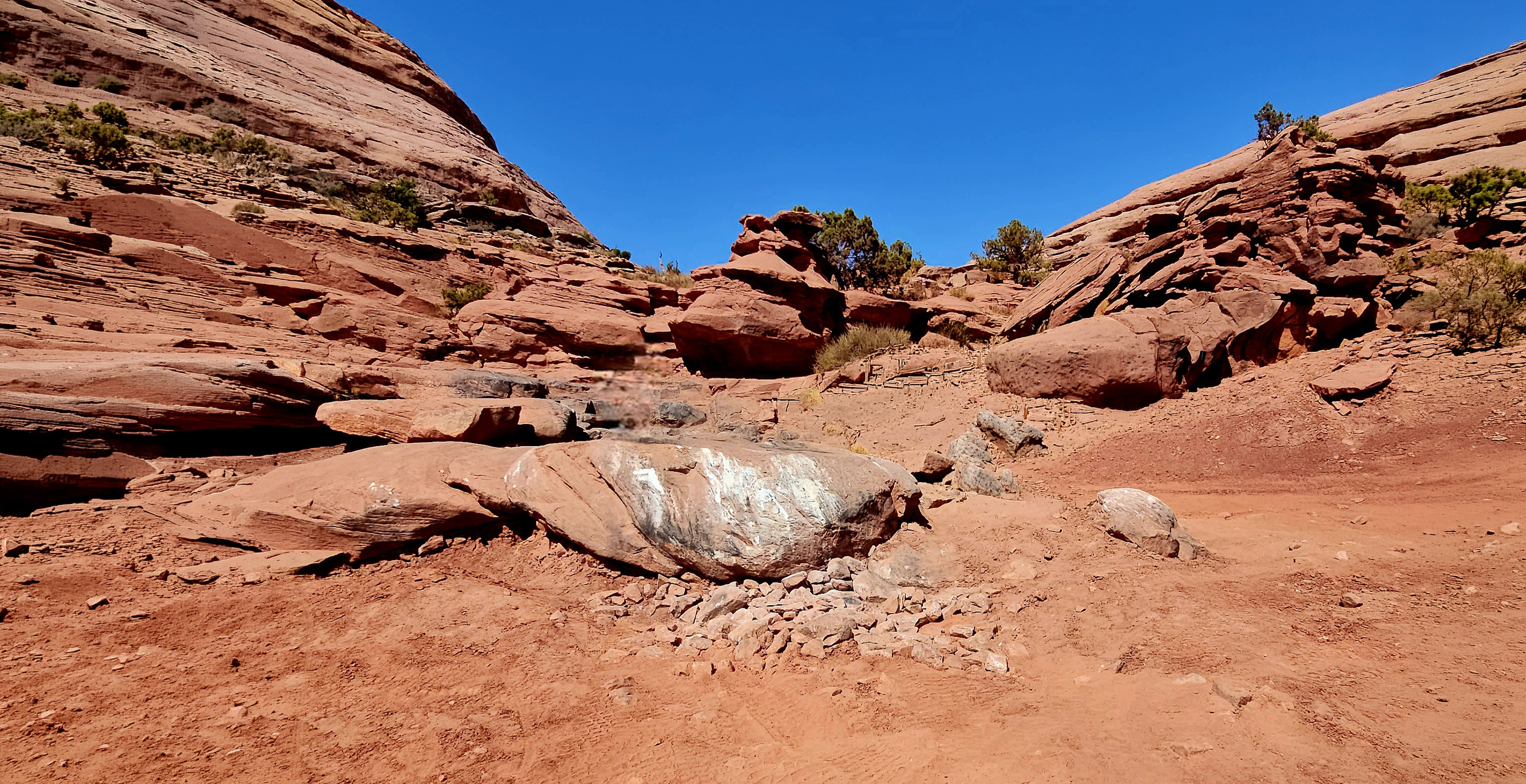
The driver pulls up to an obstacle and stops short. A crack cuts across the rock face, wide enough to swallow a tire and deep enough that a rig without the clearance has no easy way over it. A bypass runs through the dirt off to one side, though most drivers take the crack. Two people from another group are already working it, carrying rocks over from the shoulder and wedging them into the gap. They test each one with a stomp before reaching for another. A spotter waves the first rig forward, and the front tires climb across a surface that wasn't there an hour ago.
What is the plan for when all the drivers get through? Do the rocks stay or are they moved back? Maybe the group is making a temporary fix for a rig that struggled. Or they might've decided to build a new version of the obstacle that the next group will assume has always been there.
Whatever this group leaves behind is what the next driver gets.
The Case for Moving Rocks
The strongest argument for rock stacking starts with the people and vehicles involved. A crack might be deep enough to hang a differential or be too big for even a rig on 35s to get through. Filling part of the gap will let the tires cross without the same drop, reducing the chance of vehicle damage or an awkward recovery.
Wheelspin is another consideration. A driver who can place a rock and crawl across may leave less scarring than someone spinning tires at the same step. Stackers often argue that the realistic alternative to a placed rock is a rut, and a rock can be picked back up. The result depends on the soil and how the driver handles the obstacle, but it's a reasonable argument for making a difficult section easier to cross.
A struggling rig may not have a winch, a suitable anchor point, or a practical way to recover without putting people or equipment in a difficult position. Turning around may be possible, but it might mean reversing through miles of trail or abandoning a route the group expected to complete. A few well-placed rocks might be the best option.
The argument becomes stronger when the rocks are temporary. A group can use them to help everyone through, then remove them and leave the obstacle as they found it.
The argument becomes stronger when the rocks are temporary. A group can use them to help everyone through, then remove them and leave the obstacle as they found it. That approach treats stacking as a short-term solution rather than a permanent change.
The problem is that the intention to remove the rocks doesn't guarantee that anyone will. A group may run out of daylight and forget about their stacking, or decide to leave the stack because it will help the next driver. Those who object to stacking often have that leftover pile in mind. Tread Lightly!'s T.R.E.A.D. principles ask drivers to leave an area better than they found it, and both sides of the argument lean on that language. The original group got the benefit, while everyone arriving later inherits the decision.
The Case Against Changing the Obstacle
An obstacle develops a reputation through the drivers who have run it. A crack that requires careful tire placement and a good spotter may be the feature that makes the entire trip memorable. The trail rating, photos, and stories shared afterward all describe the obstacle as people have encountered it over time.
Adding rocks changes that experience. A stack that makes the obstacle easier today may become the starting point for the next group, which then adds a few more rocks to improve the line. Eventually, the obstacle may look completely different from the version that earlier drivers planned for and worked through.
For some wheelers, the concern goes beyond difficulty. They chose a route based on the obstacle they expected to encounter.
For some wheelers, the concern goes beyond difficulty. They chose a route based on the obstacle they expected to encounter. Someone else made a decision that changed it, potentially affecting the experience of every driver who follows. Those later drivers may never know the obstacle was modified or have any idea how much effort earlier drivers put into working through it.
Some critics worry that visible changes can draw the attention of land managers and put access at risk for everyone who drives the route. Others note that traction boards and similar gear can help a rig across and leave with the group, though they suit some obstacles better than others.
The usual response is that the rocks can always be moved back. That's true in some cases, but clearing a stack takes time and effort. That responsibility tends to fall on whoever happens to arrive next. Why should a driver who didn't build the pile have to dismantle it to experience the obstacle as it was before anyone stacked it?
Weather and erosion move rocks around all the time. A washout can expose new terrain, and a storm can rearrange an obstacle without anyone making a deliberate choice. Critics generally recognize that natural changes are part of off-roading. Their concern is the decision to alter the route for everyone else without agreement or authorization.
A driver may believe they're helping the group and protecting their equipment, while the next driver sees an obstacle that somebody else decided to change. Both are responding to the same pile of rocks, but they're judging it against different expectations.
When Maintenance, Modification, and Damage Overlap
Ask someone stacking rocks what they're doing and they may call it trail maintenance. Ask someone who opposes the practice and they may call it trail damage. Those descriptions carry different implications, and neither settles the question on its own.
In land management, maintenance generally refers to work that sustains a trail or keeps it functioning as intended. Modification changes its design or character, while damage harms the ground or other resources. The precise definitions and rules depend on the managing agency and location, so these terms are useful starting points rather than universal legal definitions.
Consider three ways to evaluate the same stack. The first is intent: the driver wants to help someone across or prevent unnecessary wheelspin. The second is effect: the rocks change the shape of the obstacle, regardless of why they were placed there. The third is authorization: the driver may not have permission to alter the obstacle, even when the work seems sensible.

Those tests can produce different answers. Good intentions may support the maintenance argument, while the physical change points toward modification. The question of authorization remains separate from both.
One stack can pass one test and fail the other two.
Some wheelers take a firm position that deliberately changing an obstacle without permission is unacceptable, regardless of the reason. That view has a straightforward appeal: the rules shouldn't depend on how convincing someone finds their own intentions. Others worry that treating every rock placement as damage ignores situations where a temporary adjustment prevents a worse outcome. A third worry is that if everyone agrees the answer depends on the situation, anyone can stack rocks to make an obstacle easier and call it maintenance afterward.
Many wheelers separate a forest road meant for getting somewhere from a trail driven for its obstacles. A few rocks that keep a road passable are easier to defend than the same rocks on a route people choose for the challenge.
The rules themselves can vary. A managed trail, an established rock-crawling area, and a route crossing sensitive public land may have different requirements. A driver standing at an obstacle may not know which rules apply, and personal experience on one trail doesn't establish what's permitted on another. Checking the managing agency's guidance is the reliable way to determine what is allowed.
Where Moving a Rock Ends and Building a Line Begins
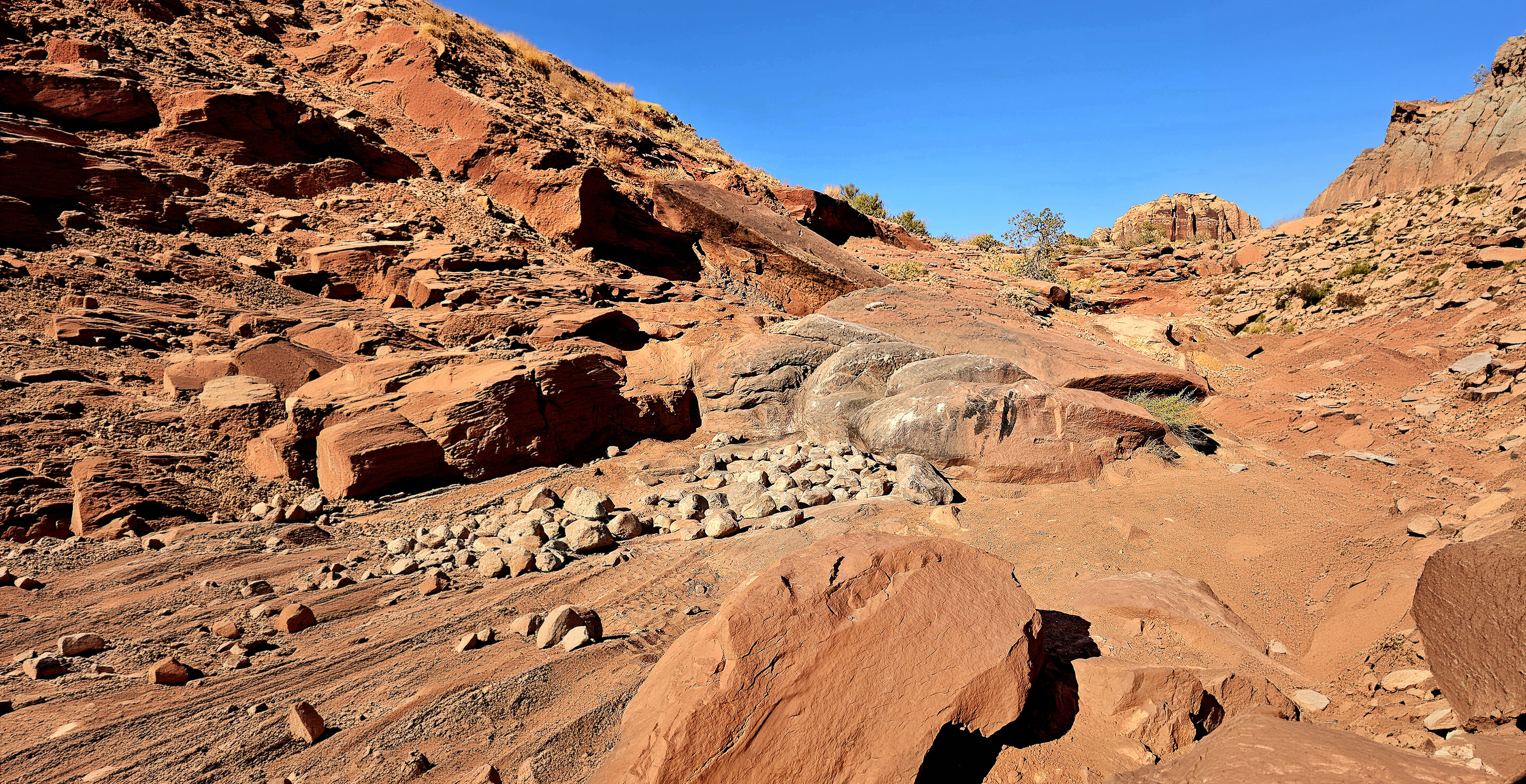
The practice covers a range of actions, and the distinctions between them matter. A driver might kick a loose rock out of the tire track or set one under a tire for a single pass and remove it afterward. Further along, several rocks get placed into a crack and left, or someone builds a ramp that reshapes the obstacle. At the other extreme, someone digs into the ground or cuts a bypass around it.
Most drivers will have little disagreement about the extremes. Clearing a loose rock from the immediate path is routine. Cutting a new bypass through undisturbed ground puts soil and vegetation at risk. The difficult cases sit between them, where the size of the change and its effect on the obstacle are open to interpretation.
Nobody marks the point where a temporary stack becomes permanent.
A single loose rock used for one crossing is relatively easy to remove. A new stack is too, but one left in place gets harder to undo over time. Traffic wedges the rocks tight and packs them into the dirt until they're part of the obstacle. Enough passes can turn a small adjustment into a new line that nobody explicitly chose.
Tread Lightly!'s guidance to cross obstacles rather than drive around them comes into play when a bypass would widen a trail or damage surrounding vegetation. Someone defending a temporary stack may argue that the placement keeps vehicles on the established route. Some wheelers see it differently, and the guidance doesn't settle it either way. If a vehicle can't get over an obstacle as it is, they say, the trail is too hard for that vehicle, and the answer is to pick another trail instead of stacking.
Both Arguments Have Limits
Leaving an obstacle unchanged may protect its established character, but obstacles change in more ways than one. Erosion and traffic inherently change an obstacle over time, and wheelers often say well-known obstacles are harder now than they once were because of it. The obstacle in the old photos may not be the one on the trail today. While stacking can be defended as a way to repair damage, that reasoning depends on whether the work is permitted by whoever manages the trail, whether that is an agency or a landowner.
Both sides can appeal to responsible recreation. Someone stacking rocks may believe they're preventing unnecessary damage and helping other drivers. Someone opposing the practice may argue that leaving the rocks behind changes the difficulty and removes the natural challenges of the trail.
Everyone draws the line somewhere. That line is rarely in the same place.

John Thies
Founder / CEO
John is the Founder of Outryd and an avid wheeler. He is a lifelong off-road and outdoor enthusiast. When he's not on the dirt chasing his next off-road adventure in his SxS or Bronco Raptor - he's spending time with family, friends, and quite possibly chasing a white ball around the golf course.
Out·ry·der |'aut-ˌrī-der|
noun
An Outryder believes the best adventures are co-built. Not just by the trails taken, but by the knowledge shared. They believe in clarity over uncertainty. In access over ego. In connection over competition. With curiosity as their compass, and community as their guide.