Download
Unlock your outdoors
Open the camera on your mobile device and place the QR code in the camera's "view”
Reading the Trail Is a Skill Most Off-Roaders Never Name
Published: Sep 21, 2026
Reading the Trail Is a Skill Most Off-Roaders Never Name
There's a point in off-roading where an obstacle stops being just an obstacle.
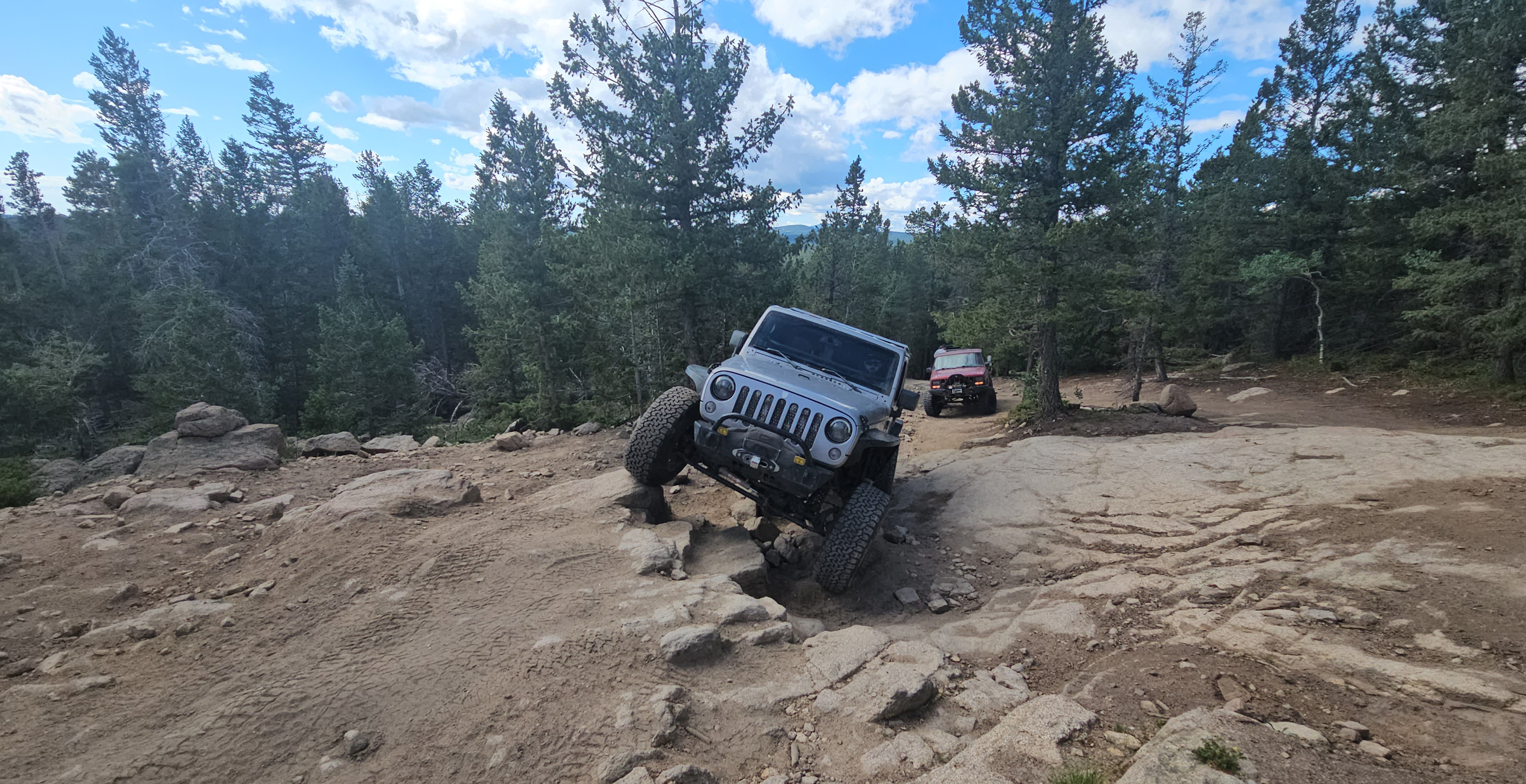
The rock, the ledge, the V-notch, or the steep climb is still there. But the driver also starts thinking about how the vehicle will interact with it: how the front tires climbing the rock changes what the back end does, whether the vehicle is going to react the way it looked like it would from the driver's seat, and how traction shifts as the surface changes.
Off-roading is more than determining a line through an obstacle or section. Reading the terrain means accounting for what's ahead and turning that into a strategy before committing.
Seeing the Obstacle Isn't the Same as Understanding It
In a previous article, we looked at trail difficulty as something shaped by more than the terrain itself. Reading the trail picks up from there: seeing past what's obvious and understanding what it actually means for the vehicle.
Most obstacles are easy enough to spot once a driver is standing in front of them. What's harder to see from the driver's seat is how those things are going to interact with the vehicle, which is part of why a spotter earns their keep on tougher terrain. A second set of eyes outside the vehicle can see angles and positions that are hidden from inside.
This is where reading the trail becomes less about simply spotting hazards and more about interpretation. Grade, camber, surface changes, loose material, and the way previous traffic has worn the terrain all factor into how the vehicle is likely to move as weight shifts from one corner to another.
Predicting what will happen on every inch of the trail isn't realistic. That would be nice, but trails generally refuse to cooperate with that kind of planning. The goal is to understand the situation well enough to make a reasonable decision about what comes next.
The Line Is Part of the Strategy
When people talk about reading a trail, the conversation often goes straight to line choice. Pick the right line. Put the tires here. Avoid that rock. Stay out of that hole. Line choice matters, but it's only part of the decision.
Before picking a line, the driver needs some idea of what they're trying to accomplish. A sense of how the vehicle is likely to move through the terrain, not just where the tires should go. That means looking beyond the most obvious obstacle and considering how the different pieces of the trail are going to interact.
Put a front tire on a rock and the opposite rear tire is likely dealing with something different now, sometimes lifting a wheel off the ground entirely while the other three work out whatever traction they've got.

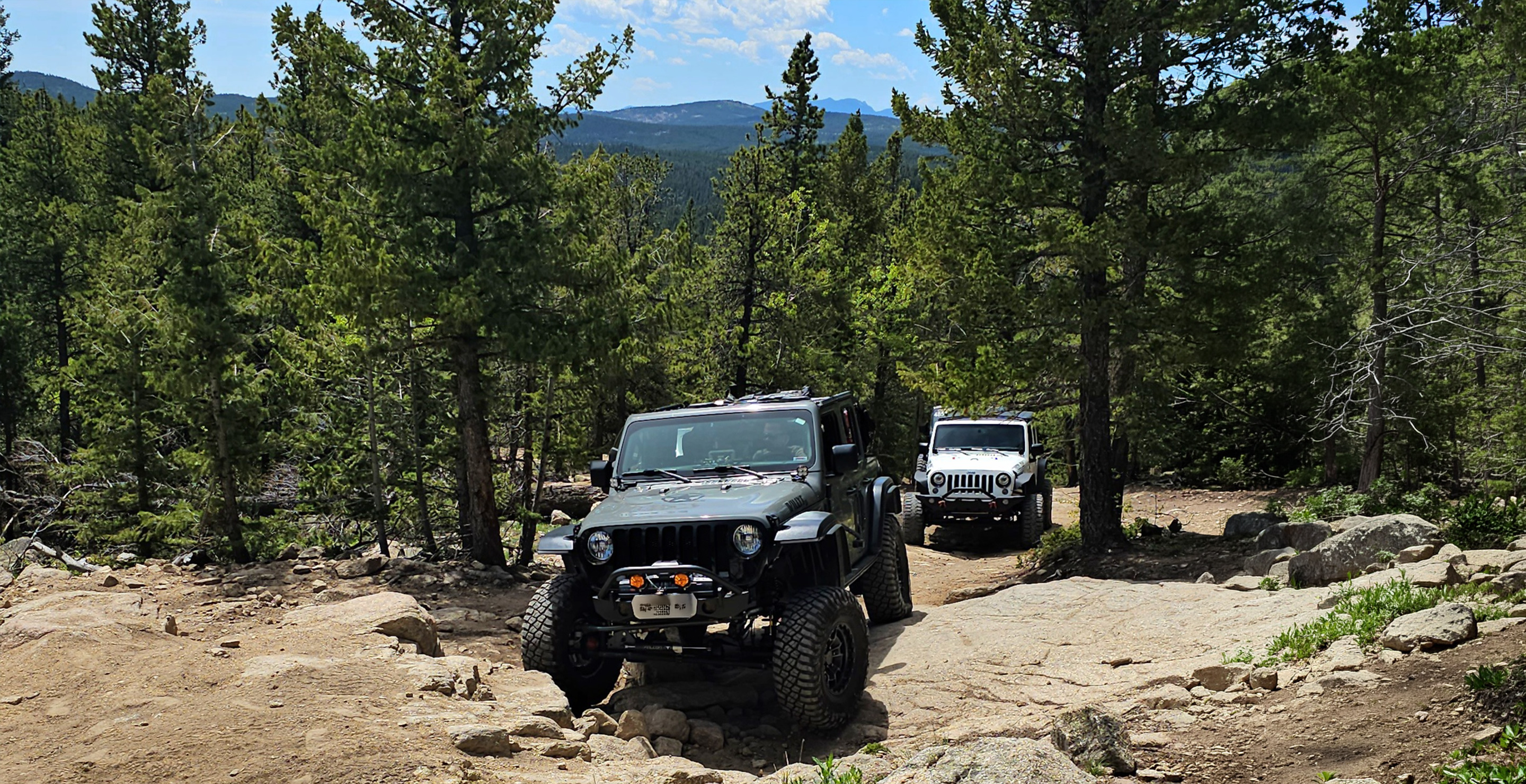
A ledge might be manageable from one direction and awkward from another, and a loose climb that looks straightforward at the bottom can turn on you once the surface changes halfway up. Even a section that appears to have one obstacle might be a sequence, where the first obstacle affects how the driver needs to approach the second.
Picking the right line is an incomplete way to describe what an experienced driver is doing. The line is the result of that assessment, not the whole of it.
What's Next Matters
Reading the trail also means looking beyond what's directly in front of the vehicle.
Getting over an obstacle is only part of the equation. The vehicle's position afterward can affect the next turn, ledge, change in grade, loose section, or tighter line. The way one section positions the vehicle for the next can matter just as much as the obstacle itself.
The terrain doesn't have to be individually difficult to create a challenging sequence. Several manageable features can become considerably more complicated when their positions and transitions work together.
Rocker Knocker in Pritchett Canyon is a good example. The two ledges aren't particularly complicated on their own, but the way they line up changes how the vehicle must move through them. Once the front wheels are on top of the first ledge, the driver turns and crab-walks the vehicle sideways into a rock, using the tire's sidewall for traction, rather than simply climbing straight ahead. The line through the first ledge is dictated in part by where that movement needs to put the vehicle for the next one.
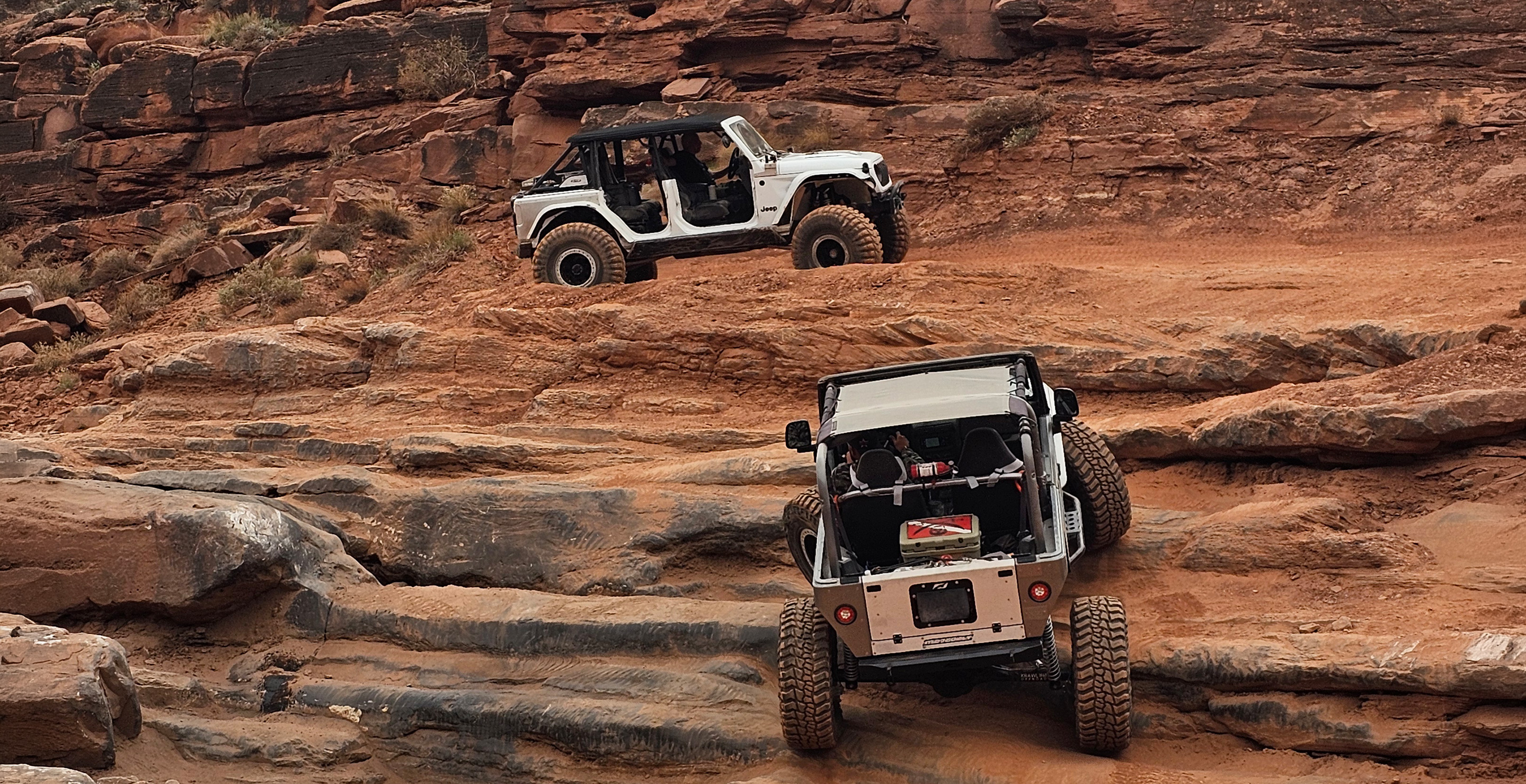
Rocker Knocker in Pritchett Canyon
That's why a driver can sometimes look at a section and decide that the obvious line isn't the best approach, even when it appears to be the most logical choice. The current line determines not just whether this obstacle gets cleared, but what the driver has to work with on the next one.
Previous drivers can also leave information that isn't obvious from a quick glance. Tire marks or a worn line can show where other vehicles have found a way through, but they can also show how traffic has affected the terrain. A rut or bypass can provide context about what vehicles have encountered before without meaning the same line is the best choice for the vehicles that follow.
The driver is building a picture of the section, not just identifying the obstacle.
The Plan Has to Survive Reality
This is where "pick the right line" can become a little misleading. There usually isn't a single perfect line waiting to be discovered. The line that makes sense depends on the vehicle, the conditions, and how the driver interprets the terrain.
Before committing, the driver needs some idea of how to approach the obstacle, what the vehicle may encounter once it starts moving, and what it will take to get over or through it. Positioning matters too. The driver needs to have some sense of where the vehicle should be when it reaches the more difficult part and what options remain when the vehicle doesn't behave as anticipated.
A plan that only works if everything happens exactly as expected isn't much of a plan. Conditions change. Tires find a different amount of traction than expected, a wheel drops farther than anticipated, or the vehicle moves differently on an obstacle than it appeared it would from the approach.
The chosen line may still work. Sometimes it doesn't.
The driver needs to have some sense of where the vehicle should be when it reaches the more difficult part and what options remain when the vehicle doesn't behave as anticipated.
When it doesn't, the assessment changes as new information becomes available. Actual traction becomes clearer once the vehicle is moving, along with its position and whether the approach is producing the expected result. A line that looked good from the bottom may make less sense halfway through the section. The driver may adjust the line, stop for another look, bring in a spotter, or get out and walk it. Reading the trail continues through that process. The driver keeps assessing as the situation develops and adjusts the approach with it.
Experience Changes the Reference Points
Now is when experience starts to make a difference.
The first time a driver encounters a particular combination of terrain, it can be difficult to know exactly what they're looking at. The slope, rocks, loose dirt, and rut are all visible, but there may not be a useful reference for how the vehicle will react when those things come together.
With more time on the trail, those reference points begin to accumulate. A driver remembers what a steep climb felt like when the front tires began the climb. They learn what the vehicle does when one side gets light and develop a better sense for how much traction different surfaces are likely to provide. Situations also become easier to recognize when a line that looks good isn't going to put the vehicle where it needs to be.
That kind of "feel" isn't unique to off-roading. Most sports and activities are built on the same premise. It's like learning to play golf. A golfer develops a "touch" or “feel” for how a putt is likely to break, how fast the surface is, and how the ball is going to react with a given lie.
That doesn't mean they know exactly what every putt will do or how the ball will bounce on the green. It means they've accumulated enough experience to interpret what they're seeing differently.
Off-roading works the same way. Time on the trail builds a sense for how the vehicle and terrain will interact. A trail can change between one run and the next, but the bigger difference is usually how much more of it the driver can now read.
Not Every Assessment Ends in Certainty
Experience doesn't eliminate uncertainty. There will always be terrain a driver has never encountered, combinations of conditions that are unfamiliar, and familiar trails that behave differently after rain, usage, erosion, or changes in surface conditions.
A driver can look at a section, make a reasonable assessment, and still not know exactly what the vehicle is going to do once it gets there.
That's not a problem by itself. That's part of the challenge of off-roading. The useful part is understanding what is known, what remains uncertain, and what information might help close that gap. Sometimes the assessment is clear enough to make the call, and other times more information is needed.
Experience gives a driver more context to work with, but there will always be something the driver doesn't know from the approach alone.
That's part of what makes reading the trail a skill. The driver gets better at interpreting what's there, recognizing what remains uncertain, and adjusting the approach when the situation calls for it.
The trail is the terrain. The skill is figuring out how to navigate it.
John Thies
Founder / CEO
John is the Founder of Outryd and an avid wheeler. He is a lifelong off-road and outdoor enthusiast. When he's not on the dirt chasing his next off-road adventure in his SxS or Bronco Raptor - he's spending time with family, friends, and quite possibly chasing a white ball around the golf course.
Out·ry·der |'aut-ˌrī-der|
noun
An Outryder believes the best adventures are co-built. Not just by the trails taken, but by the knowledge shared. They believe in clarity over uncertainty. In access over ego. In connection over competition. With curiosity as their compass, and community as their guide.