Winching Isn't Failure: Knowing When to Pull Cable
Published: Nov 3, 2026
Winching Isn't Failure: Knowing When to Pull Cable
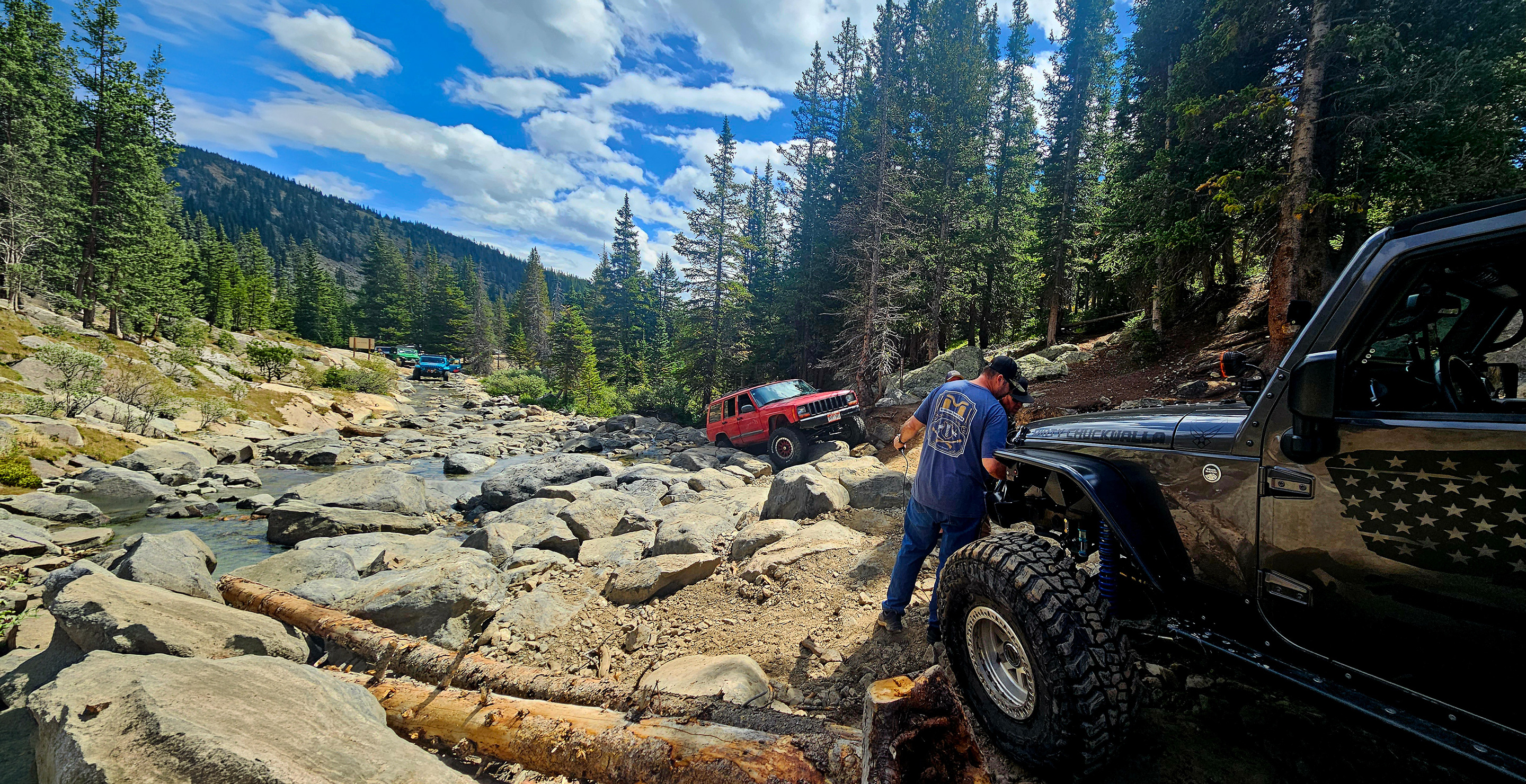
You're halfway up a rock step, three tires have found their way onto the obstacle, and the fourth is spinning somewhere below. You've tried a couple of lines, added throttle, and watched the rear tires dig deeper each time. Thirty feet up the slope is a tree solid enough to anchor to. Your friend is standing off to the side with the remote, ready to run the winch.
A decision needs to be made, and the afternoon is about to go one of two ways.
In one version, you winch. The obstacle goes unbeaten and the story gets told around the fire with an asterisk on it, but the axle housings are still straight and nothing underneath the rig is leaking. In the other, you keep trying different lines and eventually clear the lip, and the story has no asterisk on it. The hard part is that only one of those stories ever gets told, and you choose before you know which one it will be.
The Case That a Winch Pull Is a Miss
You picked that big rock step as the goal. The plan was to climb it under your own power, but the rig needed help from a cable to finish. Many drivers measure a day against fully "completing" the trail, meaning every obstacle was driven without a winch, and it's fair to feel the shortfall when one slips away.
Finishing a line on your own teaches you something, and a winch pull can leave that lesson behind on the obstacle. Maybe another attempt would have found traction. Maybe a different tire placement was all that was needed. The winch gets the vehicle to the top, but you leave with an unanswered question: could you have made it with a little more time?
Trail days are shared, and the story that gets told afterward is part of how drivers keep a friendly score. Then there is the part that rarely gets said out loud. Someone else's rig went up the same step and yours needed assistance. Bragging rights are part of the sport, and so is the sting when a buddy's rig makes it unassisted and yours doesn't.
Bruised egos are common out on the dirt, and they show up on easy trails and hard ones alike.
What Winching Provides
A vehicle hung up on a rock step isn't automatically in danger on the first attempt. A controlled attempt with a different line or better wheel placement is reasonable. Repeated throttle, wheelspin, and loading against an obstacle raise the odds of mechanical damage, particularly when a spinning tire suddenly finds grip.
What happens during those attempts matters more than how many there are. A sixth attempt that repeats the same line under growing strain carries more risk of something breaking. A break can come on the first attempt or the fiftieth, and nobody knows which one it will be.
A winch pull can provide another way through the problem, provided the equipment and anchor point are appropriate. The rig comes off the obstacle in one piece, and the group gets to work a problem instead of salvaging one.

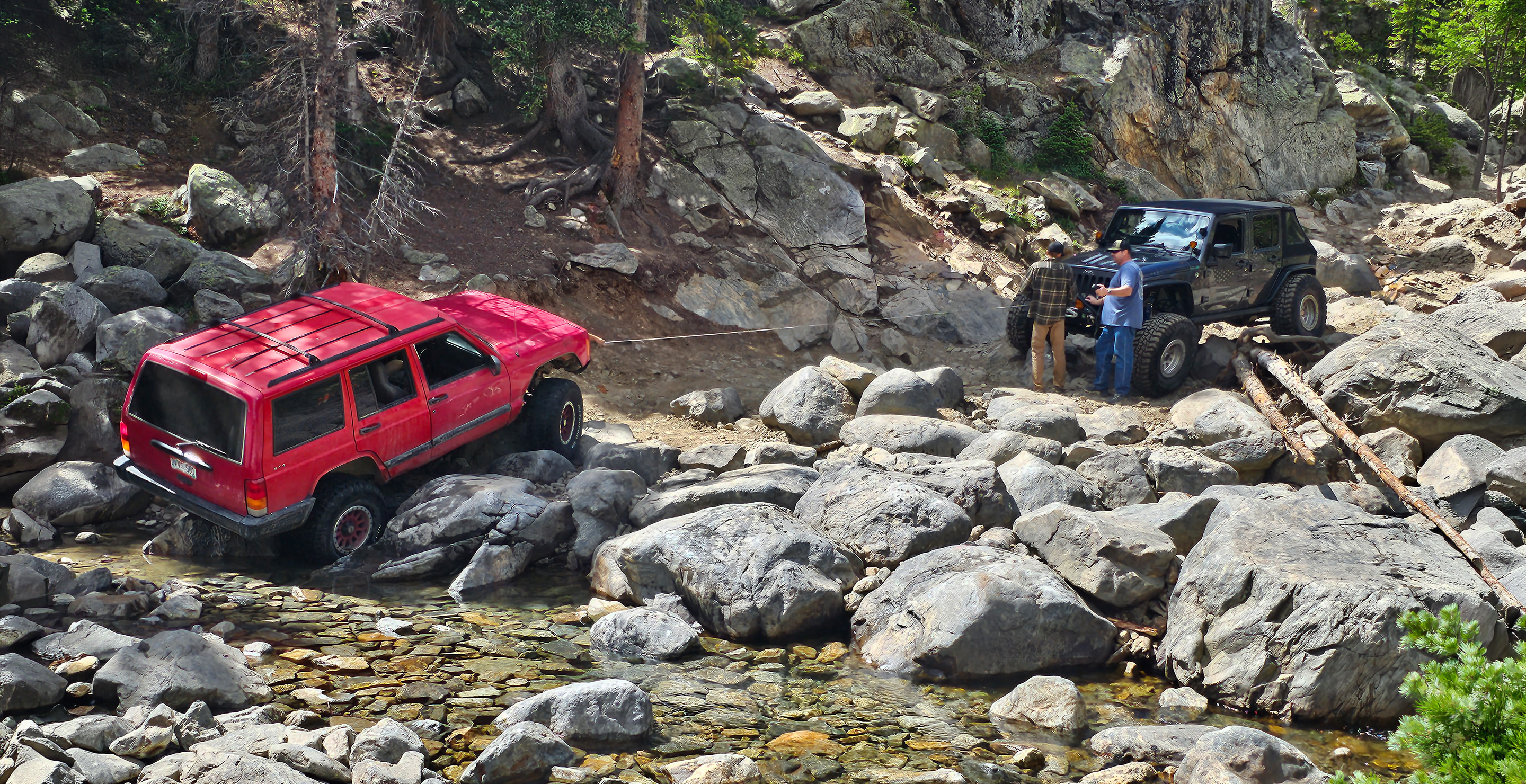
Winch pull on Holy Cross, Colorado
Winching carries its own risks, and everyone must stay clear of the line, loaded or not. The obstacle is still there afterward, and so is the option to try it again with a rig that has all its parts.
On a multi-day trip, a broken axle or differential turns the remaining days of wheeling into days of being a passenger. Depending on the failure and where it happens, a trail repair might get you moving again, or it might mean getting towed out.
An unfinished climb takes some pride with it. A broken driveline takes days.
Point of No Return
The tricky part is recognizing when another attempt stops being worthwhile. There isn't a clear distinction that separates a rig that is temporarily stuck from one that is a throttle input away from breaking something. Both look alike from the driver's seat: the angle hasn't changed, the tires sit in the same positions, and the engine sounds the same. You can feel the tires spinning and digging, but nothing definitively tells you how much more the rig can take.
Parts break on easy obstacles and survive hard ones. No obstacle rating predicts where a mechanical failure will happen, and having made it through something similar before doesn't guarantee the next attempt will end the same way.
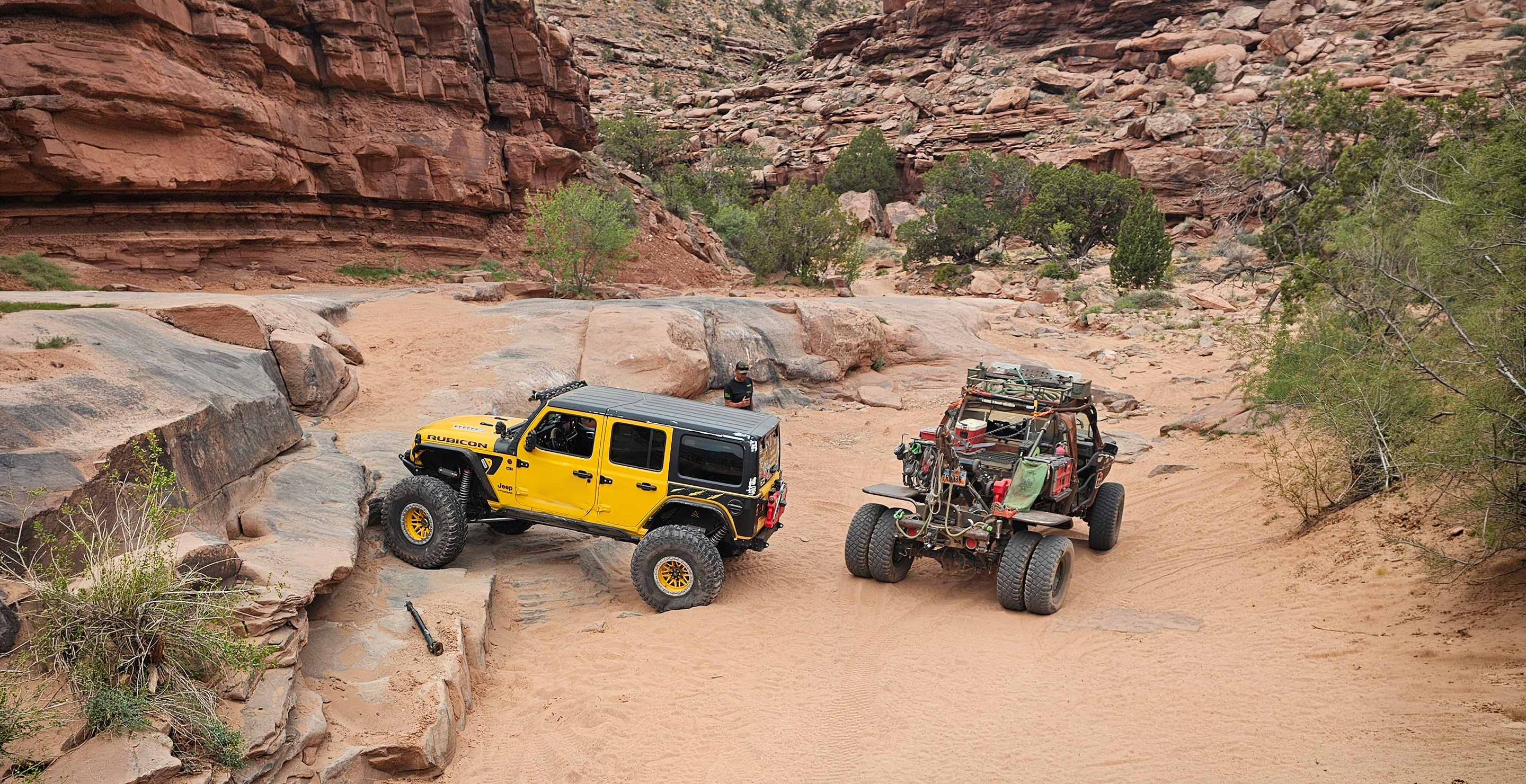
TrailMater Offroad Recovery repairing a drive shaft in Pritchett Canyon, Moab, Utah
Backing out isn't always an option either. The trail might be one way with no bypass, and reversing down an awkward rock section brings its own problems. A winch recovery takes time and gives up the original goal. Continuing to push it can add unexpected loads that take the rig past its breaking point.
After a near miss, the next attempt feels like the one that will work, and the closer you get to the top, the harder it is to walk away. You've already come this far, and one more try seems reasonable, even when nothing about the situation has improved.
Experience gives you more reference points, and the uncertainty stays anyway. Sometimes you can hear and feel enough to make the call. Other times you go with your best read and live with it.
Day One and the Last Day Get Different Answers
Without a reliable formula for finding the point of no return, the decision rests on what you have to lose. A driver might treat the same obstacle differently on two different days, with the same rig and conditions, because the value of what's ahead has changed.
Take day one of a multi-day trip in Moab. You've driven a long way and have several days of trails planned. A broken ball joint on the first afternoon changes what the remaining days will look like, so taking the winch and moving on is an easy call, especially with a capable group and good recovery gear.
Winch today, wheel tomorrow.
Now put yourself on the last day and the arithmetic shifts. Less of the trip is left to protect, so a similar obstacle skipped on day one might get wheels on it now.
Earning the Climb, Keeping the Rig
I land on judgment. A driver who winches on day one and a driver who pushes a little harder on the last both made valid decisions, although I'd prefer to talk about how they arrived at them rather than rank the results.
When I go wheeling, I want that satisfaction of never having to pull the winch. Figuring out how to get through an obstacle under my own power is part of becoming a better driver. The decisions I make to get there change based on the vehicle, the group, the trip, and how much dirt I have in front of me.
I can see a winch pull as a failure when the goal was a specific obstacle. However, I am not afraid to pull the cable when needed. I would feel worse about having pushed it a little too hard and ending up with a broken tie rod than about my bruised ego or the obstacle I left for another day.
Don't get me wrong, winching at the first hint of resistance does have its downsides. If you're developing a driving skill, never attempting a hard line means missing part of the experience, and sometimes another controlled attempt is how you learn what the rig can do under stress.
Winching can be part of responsible wheeling, and a cable on the bumper is not evidence of incompetence. What you're willing to risk is a personal call.
Sometimes the best line choice is the one on the winch drum.

John Thies
Founder / CEO
John is the Founder of Outryd and an avid wheeler. He is a lifelong off-road and outdoor enthusiast. When he's not on the dirt chasing his next off-road adventure in his SxS or Bronco Raptor - he's spending time with family, friends, and quite possibly chasing a white ball around the golf course.
Out·ry·der |'aut-ˌrī-der|
noun
An Outryder believes the best adventures are co-built. Not just by the trails taken, but by the knowledge shared. They believe in clarity over uncertainty. In access over ego. In connection over competition. With curiosity as their compass, and community as their guide.