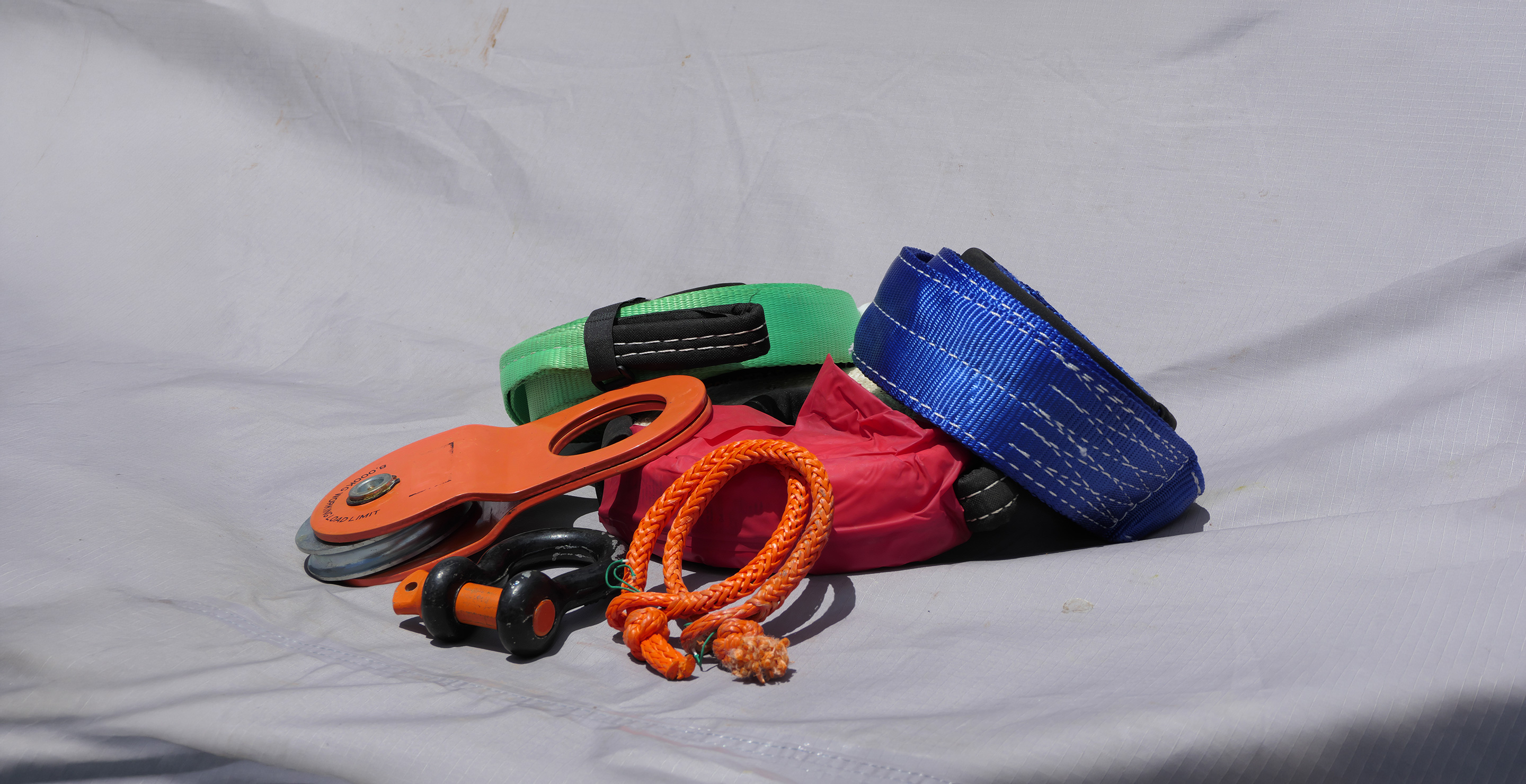
Off-Road Recovery Gear: What It Does and When You Need It
Published: Nov 17, 2026
Off-Road Recovery Gear: What It Does and When You Need It
The buggy is three hours deep into a rock canyon when a steering link lets go. No recovery rig is getting in there, so any help must come from inside the group. Thankfully, another driver has a welder mounted on their buggy, and twenty minutes later they're moving again.
Most of us will never carry a welder. But that crew solved the same problem every group faces when a rig gets stuck or broken.
A stuck rig only gets out with the gear someone has on hand.
Build the Kit Around the Recovery You're Likely to Need
Was that welder on board because the group planned for a broken steering link, or because one driver always brings it? On most trips, the honest answer is the latter. You don't ask who has a kinetic rope, or whether anyone packed a tree saver to go with their winch. You assume somebody does, and you only find out when you need it.
The gear packed should follow the trip you're taking. Start with your vehicle's loaded weight, because nearly every rating in a recovery kit is sized against it. A side-by-side, a stock 4WD, and a truck built for hauling a week of camping gear need different ropes and shackles, and the gap widens as tires get bigger. Larger, heavier tires add weight and resistance, especially in mud, so a rig on 37s asks more of every piece of gear than the same rig on stock tires.
Terrain changes the kit too. In mud and sand, you're usually buried. On rock, you're more often hung up or broken. The farther out you are, the longer you're on your own if the first recovery attempt doesn't work.
The gear below only helps if you or someone in the group knows how to use it. A kinetic rope in the hands of someone who has never rigged one adds risk to the recovery. Recovery planning starts before the trip, when there's still time to buy what's missing and get comfortable with it.
Knowing Where to Attach It
If you carry the right gear, you can almost always find a way to hook it up. Rated recovery points, front and rear, are the best answer. They're built and tested for the loads a kinetic recovery throws at them, and they keep you from crawling under a muddy rig looking for something solid.
Plenty of vehicles come from the factory with tow hooks or loops instead. Those aren't always rated for recovery, but for a slow, steady tow they're a reasonable fallback. Tie-down points are a different part, built for strapping the vehicle down during shipping, and many manuals say not to tow from them. Check your owner's manual to see which one you have.
Never put a kinetic rope or strap on a hitch ball.
A hitch ball looks strong because it holds a trailer, but towing a trailer is a steady load with no stretch or snap. A kinetic recovery shock-loads the ball, the shank, and the pin, and none of them are designed for it. In one widely shared incident, a tow strap was hooked to a drop hitch for a running-start recovery. The hitch assembly broke loose and came through a driver's windshield, killing him. If you want to use the receiver, a rated receiver shackle mount slides into the hitch and gives you a proper attachment point.
Recovery Straps, Tow Straps, and Kinetic Ropes
These three get lumped together because they look alike rolled up in a bin. They do very different jobs, and the difference comes down to how each one behaves under load.
A tow strap is built for a steady tow. It's usually polyester, it barely stretches, and it often has metal hooks on each end. It's the right tool when a rig with a broken axle needs to be towed off the trail and the line can be snugged tight before anyone moves. Take up the slack first, then ease into it. What a tow strap can't handle is a running start. With almost no stretch, all the shock goes straight into the hooks and whatever they're attached to. A metal hook is the last thing you want flying through the air if something lets go.
A recovery strap, sometimes called a snatch strap, is nylon with sewn loops on each end, and it stretches under load.
That stretch is the point.

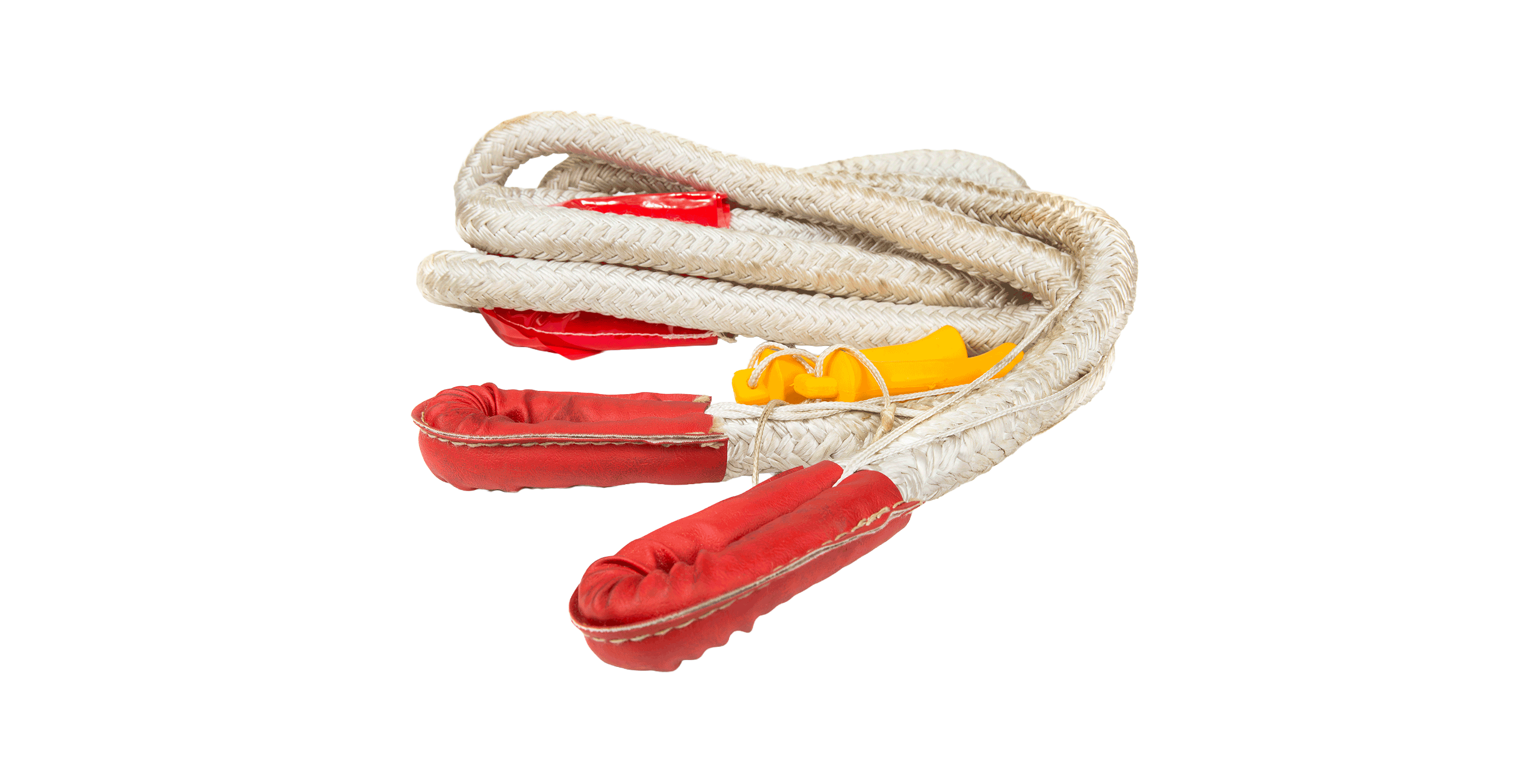
Kinetic rope
The recovery vehicle starts with some slack in the line and builds a little momentum. The strap stores that energy as it stretches, then releases it into the stuck vehicle, popping it out of its predicament. It's the tool for a rig sunk in mud or high-centered in sand.
A kinetic rope works on the same principle as the recovery strap, but with a softer hit. These ropes are usually braided nylon and have more elasticity. They cost more, and for a lot of drivers they've replaced the strap as the main recovery line.
Shackles and Soft Shackles
Shackles connect the rope or strap to the rig. Steel bow shackles, often called D-rings, are durable and don't mind heat or sharp edges. Be sure to fasten them appropriately. They're heavy, and a steel shackle that comes loose under load becomes a projectile.
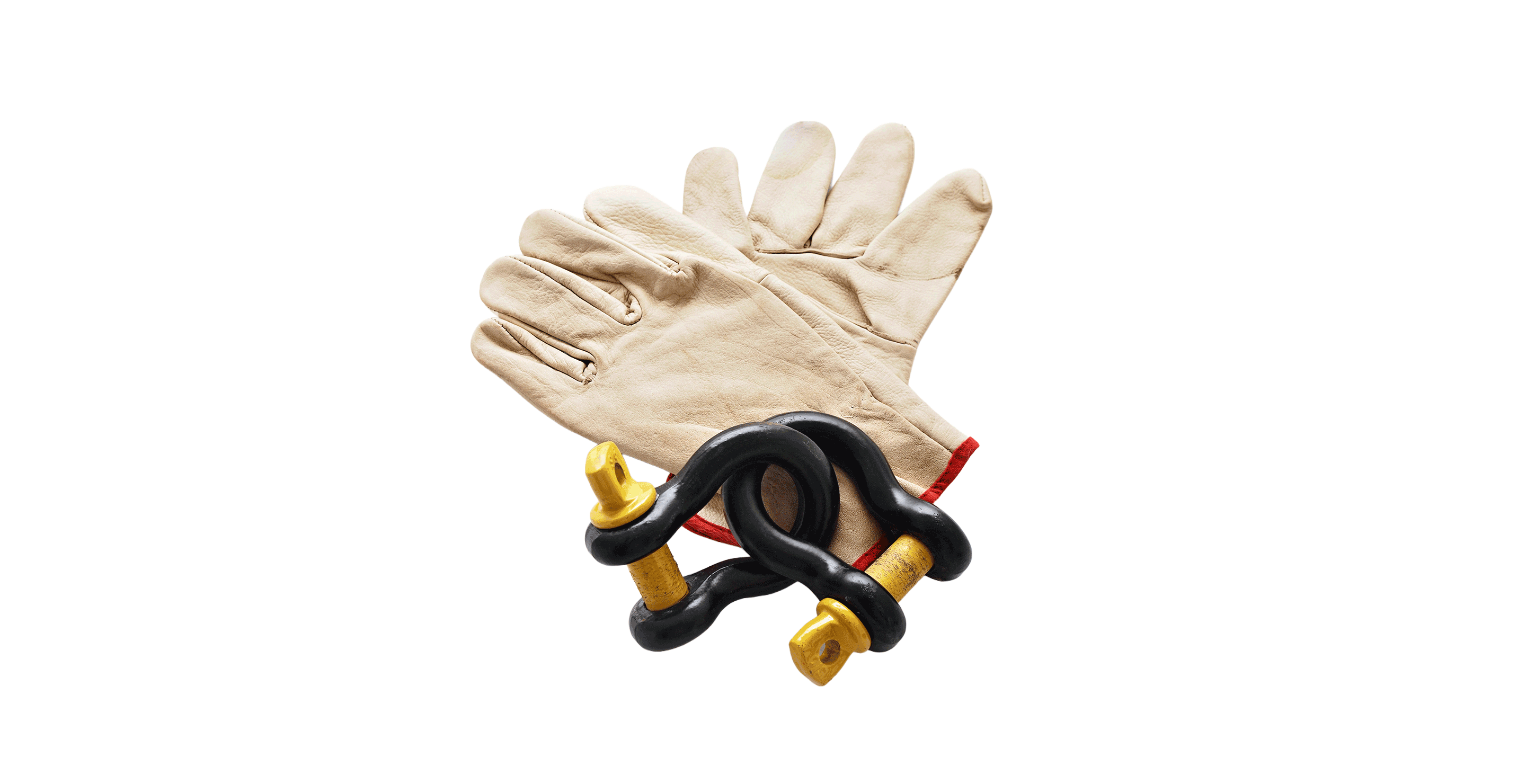
Steel bow shackles
Soft shackles are loops of synthetic rope with a knotted closure. They weigh almost nothing and carry far less energy if something fails. They don't react well to sharp edges or heat, so they're a poor fit for a rough-cut recovery point or anything near an exhaust.
Plenty of drivers carry both.
Whatever you choose, look for a working load limit or breaking strength stamped or tagged on the shackle to make sure it holds up against the rope or strap you're using. The weakest piece in the chain decides how much the whole setup can take.
The Winch and What Goes With It
A winch is the one piece of recovery gear that doesn't depend on another vehicle being in the right spot. It's bolted to your rig, and in a canyon where nobody can get in-front of you, it might be the only option. The real barrier is cost, but once it's on the bumper it's useful on any trail you drive.
Carrying a winch means carrying a few other things with it. The first is a tree saver, a wide strap that wraps around the anchor tree so the winch line never touches it. Wrapping the line itself around a tree and hooking it back on itself chews up the bark and can damage the line, especially steel cable.
If you carry a winch, carry a tree saver.
The second depends on your line. Steel cable is tough and resists abrasion, but it stores a lot of energy under load and whips back hard if it breaks. Synthetic line is lighter and carries far less energy if it fails, though it needs more care around sharp rock and heat. Either way, a damper draped over the middle of the line helps. When using steel cable, it's highly recommend that you don't winch without one, even if it's a heavy jacket.
A snatch block and a line extension round out the setup when the anchor is off-angle or out of reach, but those are situational.
Knowing when to stop and winch only matters if there's a winch on the rig. A previous article, Winching Isn't Failure, covers when to make that call.
Traction Boards Earn Their Space
Traction boards can be the most useful things in the rig, depending on where you're wheeling. In sand, mud, and snow, wedging a board under a spinning tire gives it something to bite, and a lot of the time that's all it takes to drive out without anyone pulling winch cable.
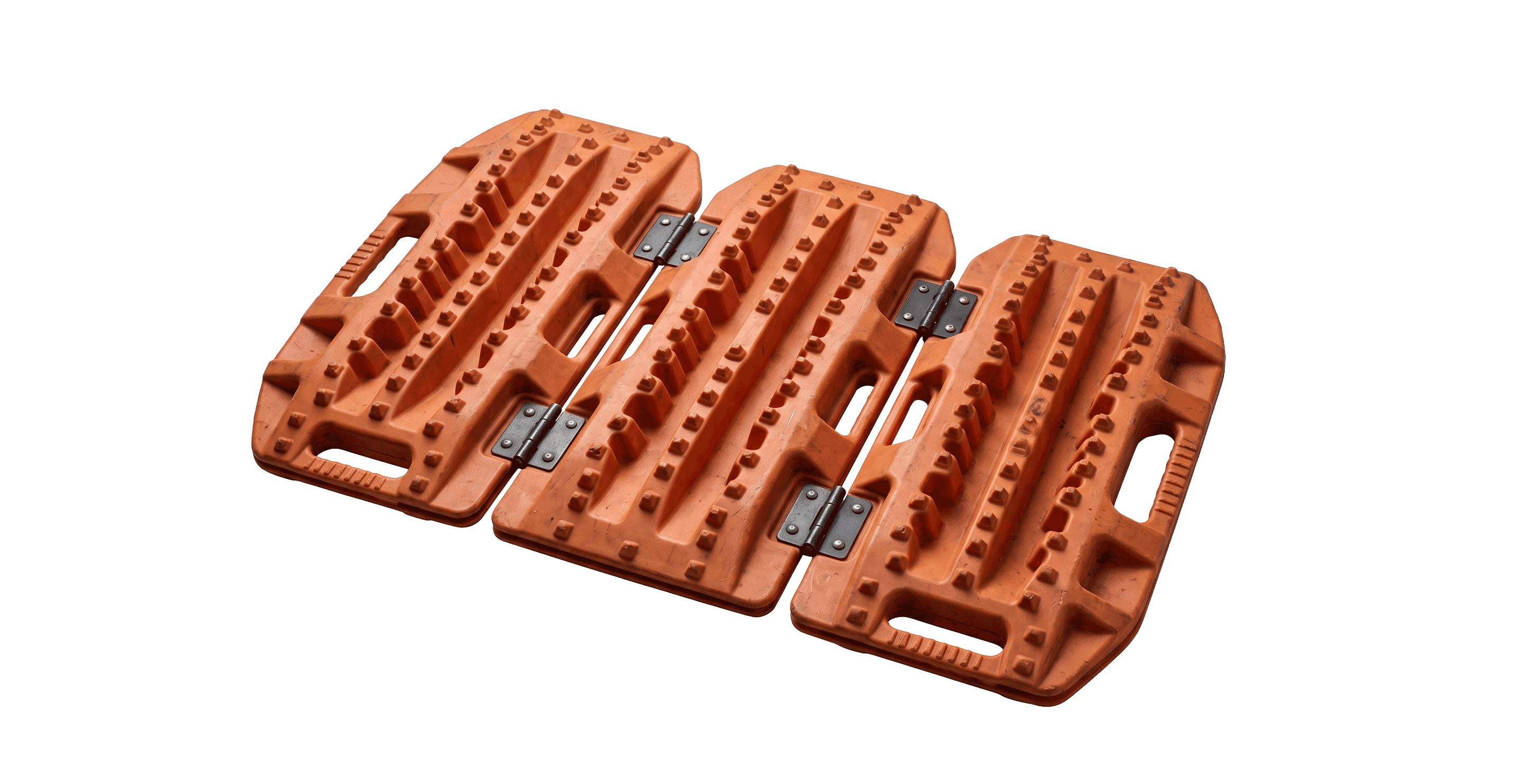
Traction boards
On rock, they're needed less often. A rig hung up on rock usually needs to be winched or repositioned rather than given more grip, and boards don't do much with a tire in the air. Even in rocky country, they're cheap insurance for the wet or muddy stretch you didn't plan for.
Traction boards can also be useful when winching. If the winch line has to run over a sharp edge, set a board down at the edge with the cleats up and run the line between the cleat sections. The board takes the abrasion and keeps the line from snagging, which matters most when using synthetic cable.
Gloves and the Small Stuff
On most trail days, the gear that gets used lives in a bag behind the seat.
Gloves come first. Steel cable develops broken strands that slice skin, synthetic line can burn a palm, and a muddy shackle pin is hard to work with bare hands. A shovel clears mud or sand from in front of the tires and under a high-centered frame, and it's often faster than any other recovery you could set up.
A tire repair kit and a compressor handle one of the most common trail problems, a flat. For tire damage a repair kit can't fix, you'll need to swap on the spare. That takes a jack rated for your rig and tall enough to clear your tires. Bring a base plate if you plan on wheel'in in soft terrain. A basic tool roll and some zip ties round it out.
None of this is exciting, and all of it gets used.
Recovery-Gear Misconceptions
A bigger rating is always safer. It sounds logical, but kinetic gear works by stretching, and a rope rated for a vehicle twice your vehicles weight won't stretch much under a lighter rig. Less stretch means a harsher jolt to both vehicles and every connection between them. Size the rope or strap to the weight range the manufacturer lists for your vehicle.
More gear means more prepared. A full bin of recovery gear and no experience using it can make a bad situation worse, because it encourages someone to try a recovery they don't understand. The kit you've practiced with is worth more than the one you haven't opened.
A winch means you don't need a strap. A winch needs an anchor, and sometimes the best anchor is another vehicle. Other times a quick kinetic recovery gets a rig out in a fraction of the time it takes to pull cable. Carry a strap or rope too.
Anything sold as recovery gear is rated. Not all of it is. Look for a working load limit or breaking strength printed on the tag or stamped into the metal, and skip anything that doesn't list one. Unrated gear is a guess, and the middle of a recovery is a bad time to find out if you guessed correctly.
What Belongs in Your Off-Road Recovery
The Essential items belong in the rig before it leaves pavement. The rest depends on your vehicle, your terrain, and how far from help you're headed.
Essential
- Rated recovery points front and rear, or a rated receiver shackle mount
- Gloves, shovel, and zip ties
- Traction boards
- Jack rated for your rig, with a base plate
- Tire repair kit and compressor
Highly recommended
- Winch and tree saver
- Kinetic rope or recovery strap sized to your vehicle
- Shackles, soft or steel, rated to match the rope or strap
- Damper (a must with steel cable)
Situational
- Snatch block
- Winch line extension
Every item on the Essential list is there because it helps a rig get unstuck or back on the trail when nobody else is around. Those are the items that should be in or on every vehicle at all times.
Pack as if you'll get stuck, and you won't be strapped for gear.
Recovery Terms
Damper
A weighted blanket or bag draped over the middle of a winch line or strap. If the line or a connection fails, the weight absorbs some of the energy and drops the line toward the ground instead of letting it whip back toward people or the vehicle.
Kinetic Recovery Rope
A braided nylon rope designed to stretch under load. It stores energy from the recovery vehicle's momentum and releases it to the stuck vehicle.
Recovery Strap
A flat nylon strap with sewn loops, also called a snatch strap, built to stretch during a kinetic recovery. A tow strap looks similar but barely stretches.
Soft Shackle
A loop of synthetic rope with a knotted closure, used in place of a steel shackle to connect a line to a recovery point.
Tree Saver
A wide strap wrapped around a tree used as a winch anchor. It protects the bark and keeps the winch line from being wrapped back on itself.
Snatch Block
A pulley that attaches to an anchor or recovery point, used to change the direction of a winch line or increase the winch's pulling power
Working Load Limit vs. Breaking Strength
Breaking strength is the load at which a piece of gear fails. Working load limit is the most it's meant to handle in normal use, set well below breaking strength.

John Thies
Founder / CEO
John is the Founder of Outryd and an avid wheeler. He is a lifelong off-road and outdoor enthusiast. When he's not on the dirt chasing his next off-road adventure in his SxS or Bronco Raptor - he's spending time with family, friends, and quite possibly chasing a white ball around the golf course.
Out·ry·der |'aut-ˌrī-der|
noun
An Outryder believes the best adventures are co-built. Not just by the trails taken, but by the knowledge shared. They believe in clarity over uncertainty. In access over ego. In connection over competition. With curiosity as their compass, and community as their guide.